

Arena Breakout Beginner Mistakes: 10 Reasons New Players Keep Dying

New to Arena Breakout? This beginner mistakes guide explains 10 common decisions that get new players killed, from moving without cover and looting too long to using the wrong ammo, taking unnecessary fights, and waiting too long to extract. Fix these habits to survive more raids, lose fewer kits, and improve faster.

60+6 Bonds
$0.74
$0.99-$0.25310+25 Bonds
$3.7
$4.99-$1.29630+45 Bonds
$7.39
$9.99-$2.61580+110 Bonds
$18.48
$24.99-$6.51
If you are new to Arena Breakout and keep wondering why you die so quickly, your aim may not be the real problem.
Many beginner deaths happen before the gunfight is even decided. Moving through open ground without cover, looting for too long, re-peeking the same angle, bringing the wrong ammo, following unnecessary fights, or waiting too long to extract can turn an otherwise good raid into a complete loss.
Arena Breakout is an extraction shooter built around risk and survival. Winning does not always mean getting the most kills. In many raids, the better decision is avoiding a bad fight, protecting the value you already have, and reaching extraction alive.
This Arena Breakout beginner mistakes guide covers 10 common habits that repeatedly get new players killed. Fixing them will help you survive more raids, lose fewer kits, manage your resources better, and improve much faster.
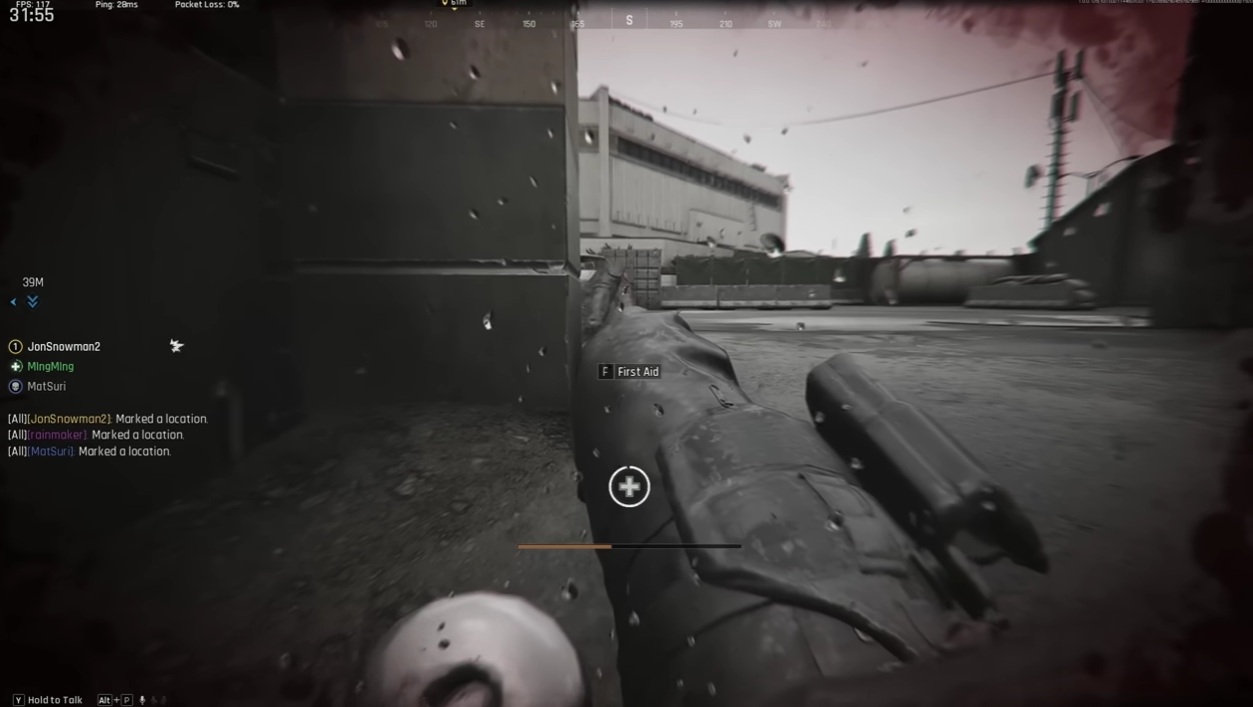
The Most Common Arena Breakout Beginner Mistakes
The biggest Arena Breakout beginner mistakes usually come from poor risk management rather than poor shooting mechanics.
New players often expose themselves without a safe fallback, spend too much time looting dangerous areas, use gear they cannot comfortably afford to lose, or continue fighting after the raid has already given them a good opportunity to leave.
The 10 most common Arena Breakout beginner mistakes are:
- Trusting easy early matches too much
- Learning unfamiliar maps with expensive kits
- Moving without nearby cover
- Looting too long in unsafe areas
- Re-peeking the same angle repeatedly
- Using ammo that does not fit the situation
- Blindly following bad teammate decisions
- Confusing passive play with smart play
- Staying too long after a raid has gone badly
- Misunderstanding the real objective of a raid
Notice that very few of these mistakes are purely about aim. They are mostly about positioning, timing, information, economy, and knowing when the risk is no longer worth taking.
If you are still learning the basic gameplay loop, maps, loadouts, and extraction mechanics, start with our Arena Breakout beginner guide first. Then use the mistakes below as a checklist for improving your raids.
1. Trusting Early Easy Matches Too Much
One of the first traps new Arena Breakout players fall into is assuming that a few successful early raids mean they already understand the game.
Your first matches can feel surprisingly manageable. You may win several fights, extract with useful loot, and start believing that your positioning, routes, and loadout choices are already good enough.
That confidence can become dangerous once you begin facing players who punish mistakes more consistently.
An unsafe crossing that worked before suddenly gets you eliminated. Standing in the same doorway for too long becomes an easy shot. A push that felt aggressive and successful in an earlier raid becomes an expensive mistake.
The important lesson is simple:
Early success is practice, not proof that your fundamentals are already strong.
Use your first raids to learn sound cues, routes, extraction locations, common traffic areas, and the pace of the map. Pay attention to why a decision worked instead of assuming every successful result was a good decision.
The goal at this stage is not to prove that you are already good at Arena Breakout. It is to build habits that will still work when the opposition becomes less forgiving.
2. Learning Maps in Expensive Kits
Expensive equipment can make a beginner feel safer, but it does not replace map knowledge.
If you do not yet understand spawn areas, extraction routes, dangerous locations, common rotations, and where players are likely to appear, bringing increasingly valuable gear simply makes every learning mistake more expensive.
You may have better armor and a stronger weapon, but those advantages cannot protect you from walking into the wrong area at the wrong time.
When learning a map, use equipment that you can comfortably afford to lose. This gives you more opportunities to experiment with routes and positioning without worrying about losing a large portion of your resources every time something goes wrong.
Cheap or moderate-risk runs also improve decision-making. Instead of constantly thinking about the value of your kit, you can concentrate on questions such as:
- Where do players usually appear early in the raid?
- Which routes expose me for too long?
- Where can I disengage if a fight becomes unfavorable?
- Which areas attract the most player traffic?
- How long does it take to reach a safe extraction route?
Learn the map first. Increase the value of your loadout later.
A beginner who understands the terrain with an affordable kit is often in a much better position than a beginner carrying expensive equipment without knowing where the danger is coming from.
3. Moving Without Cover
Moving through the map without thinking about cover is one of the fastest ways for beginners to lose a raid.
New players often concentrate entirely on where they want to go. Experienced players also think about what they will do if they are attacked on the way there.
Crossing an open road, standing in a doorway, stopping in the middle of a room, or running across exposed terrain may save a few seconds, but it can leave you with no safe response when another player starts shooting.
Before moving into a dangerous area, identify your next safe position.
A useful beginner rule is: before every move, know where your next piece of cover is.
That might be a wall, a building corner, terrain, a vehicle, or another position that breaks the enemy's line of sight.
This changes how you move through a raid. Instead of traveling directly from Point A to Point B, you begin moving between positions that give you options.
If you are fired on, you already know where to retreat. If you hear footsteps, you have somewhere to hold. If you need to heal or reload, you are not forced to do it in the open.
Many deaths that appear to be caused by superior enemy aim actually started several seconds earlier when the player moved into an area with no safe escape.
4. Looting Too Long in Unsafe Areas
Loot is the reason players enter raids, but greed is also one of the most common reasons beginners fail to extract.
You do not need to search every container, inspect every body, or completely clear every room you enter.
The longer you remain stationary in a dangerous area, the more opportunities another player has to hear you, see you, rotate toward you, or approach after hearing an earlier fight.
This becomes especially dangerous immediately after winning a gunfight.
Beginners often eliminate an enemy and instantly open the defeated player's inventory. But firing a weapon may have already revealed your approximate location to other players nearby.
Before looting, ask:
- Could there be another teammate nearby?
- Did the fight create enough noise to attract another squad?
- Do I have cover while looting?
- Is this loot valuable enough to justify staying here?
- Do I already have enough value to consider extracting?
A better sequence is to secure the immediate area, check your surroundings, take the most valuable items first, and then decide whether staying longer is worth the additional risk.
You do not make money from loot simply because it is in your backpack. You make money when you successfully extract with it.
5. Re-peeking the Same Angle
Re-peeking the same position is one of the easiest combat habits for opponents to punish.
You fire from behind cover, move back for a moment, and then immediately expose yourself from exactly the same place.
The problem is that the enemy already knows where your head or body is likely to appear.
Your first peek may surprise them. Your second identical peek usually does not.
If you have already revealed your position and did not finish the fight, try to change something before engaging again.
- Move to another side of the cover.
- Change elevation when possible.
- Rotate to another nearby angle.
- Wait and force the opponent to move.
- Disengage if the position is no longer favorable.
You do not always need a huge rotation. Even a small positional change can make your next appearance less predictable.
The important principle is that information matters. Once the enemy knows exactly where you are, giving them the same shot again makes their job easier.
Many beginner fights are lost not because the first peek was terrible, but because the player repeats it after the opponent is already prepared.
6. Using the Wrong Ammo as a Beginner
New players often spend most of their attention on weapons while treating ammunition as an afterthought.
That can be an expensive mistake.
In Arena Breakout, your weapon and your ammo work together. A good-looking gun does not automatically make every round effective against every target.
The other mistake is going too far in the opposite direction and spending heavily on ammunition before your overall survival habits are reliable.
If you repeatedly die because of bad positioning, unnecessary pushes, or poor extraction decisions, extremely expensive ammo will not fix the underlying problem. It simply increases how much each failed raid costs.
Beginners should think about ammo as part of their total raid budget.
Ask yourself:
- What type of fight am I expecting?
- How much can I afford to lose on this run?
- Does my ammunition make sense for the opponents I am likely to face?
- Am I spending so much on ammunition that one bad raid damages my economy?
The goal is not to automatically buy the cheapest ammunition or the most expensive ammunition.
The goal is to use ammo that fits the risk and purpose of the raid.
As your map knowledge, positioning, and survival rate improve, you can justify taking more valuable equipment because you are less likely to lose it through avoidable mistakes.
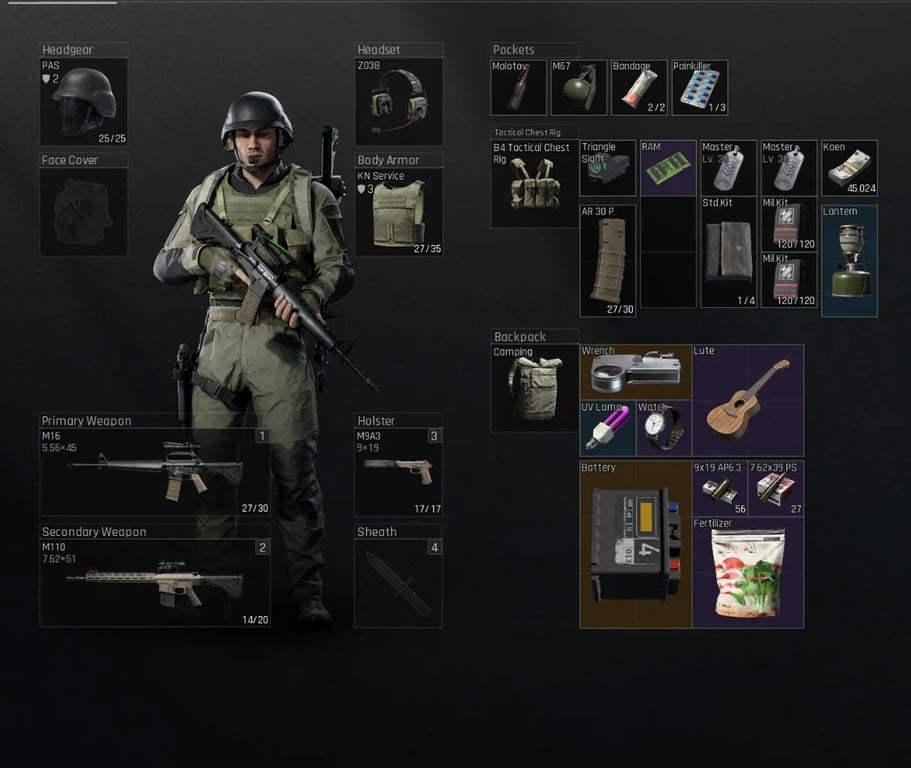
7. Following Bad Teammate Decisions
Playing with teammates can make raids easier, but it can also teach beginners some very bad habits.
New players often assume that the most confident teammate must know what they are doing. When that teammate pushes a building, chases gunfire, or decides to loot another area, everyone follows.
Confidence and good decision-making are not the same thing.
A teammate may be impatient, overconfident, unfamiliar with the situation, or simply willing to take more risk than you are.
Before following a push, think about what the team is actually gaining.
Do you have useful information about the enemy? Is there good cover? Is the fight necessary? Do you already have enough loot to leave? Will winning the fight meaningfully improve the raid?
Good teamwork does not mean copying every decision another player makes.
Sometimes the best team decision is holding an angle while someone else moves. Sometimes it means repositioning rather than pushing. And sometimes it means recognizing that a teammate has committed to a bad fight that does not need another player joining it.
Play with the team, but continue thinking for yourself.
That habit becomes especially important when playing with random teammates whose risk tolerance and experience may be completely different from yours.
8. Confusing Passive Play With Smart Play
After learning that reckless aggression gets punished, some beginners make the opposite mistake: they become afraid to make any decision at all.
They crouch in one location for too long, refuse to rotate, freeze whenever they hear another player, and allow the raid to develop around them while giving up control of their own position.
That is not the same as tactical patience.
Smart defensive play always has a purpose.
You might hold an angle because you know an opponent must cross it. You might stop moving to listen for footsteps. You might wait because another team is fighting nearby. You might slow down while approaching extraction.
Those decisions are deliberate.
Passive play becomes a problem when you are staying still only because you are afraid to choose between moving, fighting, rotating, or leaving.
A strong Arena Breakout player can be patient without becoming inactive.
You should still be:
- Listening for new information
- Checking whether your position is still safe
- Watching the raid time
- Planning your next route
- Deciding whether the fight is still worth taking
Smart survival is active decision-making, even when you are not firing your weapon.
9. Staying Too Long After the Raid Has Already Gone Bad
Knowing when to stop trying to rescue a bad raid is one of the hardest skills for new players to learn.
Maybe you already lost a teammate. Maybe your armor is damaged, your medical supplies are running low, your ammunition is disappearing, or you ended up much farther from your planned route than expected.
Beginners often react by taking even more risk because they want to make the raid “worth it.”
That creates a dangerous cycle.
You have already lost resources, so you take another fight. That fight costs more resources, so you stay longer looking for better loot. Now extraction is harder, so you take another risky route.
Eventually, a mediocre raid becomes a complete loss.
Arena Breakout does not require every run to become a spectacular success.
A modest extraction after a difficult raid is still better than losing everything while trying to force a perfect result.
If the situation has deteriorated, ask yourself whether continuing the raid offers enough potential value to justify the additional risk.
If the answer is no, leave.
If you have trouble judging when to stop looting and start heading toward an exit, our Arena Breakout extraction guide goes deeper into the decision.
10. Misunderstanding the Real Win Condition
The biggest mindset mistake beginners make is treating Arena Breakout as if every raid must revolve around kills.
Kills can be valuable, but they are not automatically the best measure of success.
You can win several gunfights, fill your backpack with valuable items, and still lose the entire raid if you never reach extraction.
At the same time, you can avoid unnecessary fights, collect useful loot, and extract safely without dominating the lobby.
That may not look as dramatic, but from a survival and progression perspective it can be the much better result.
The real objective is straightforward:
Enter with a plan, create value, manage your risk, and get out alive.
Once beginners understand this, many other decisions become easier.
You stop chasing every gunshot simply because you heard it. You stop opening one more container when your backpack already contains enough value. You stop taking fights where the potential reward is much smaller than the kit you are risking.
You also begin evaluating raids more accurately.
Instead of asking, “How many players did I kill?” ask:
- Did I survive?
- Did I extract useful value?
- Did I avoid unnecessary losses?
- Did I learn something about the map?
- Was the risk I took justified?
This mindset is one of the biggest differences between constantly losing kits and developing consistent long-term results.
Arena Breakout Beginner Mistakes FAQ
Why do beginners die so fast in Arena Breakout?
Beginners often die quickly because they make positioning and survival mistakes before the gunfight is fully decided. Common problems include moving without cover, looting exposed areas for too long, repeating predictable peeks, taking unnecessary fights, and waiting too long to extract.
What is the biggest mistake new Arena Breakout players make?
One of the biggest mistakes is treating kills as the main goal of every raid. Arena Breakout rewards players who manage risk, protect their resources, and successfully extract. A fight is only useful when the potential reward justifies the risk.
Should beginners use expensive gear in Arena Breakout?
Beginners generally benefit from learning maps with affordable equipment they can comfortably lose. Expensive gear cannot compensate for weak map knowledge, poor positioning, or unfamiliar extraction routes. Increase your loadout value as your survival consistency improves.
What ammo should beginners use in Arena Breakout?
Beginners should choose ammunition based on the expected difficulty of the raid and their available budget. Ammo that is too weak can reduce combat effectiveness, while spending too much before your survival fundamentals are reliable can make each death unnecessarily expensive.
How can beginners survive more raids in Arena Breakout?
Move between cover, learn extraction routes before risking expensive kits, spend less time looting exposed areas, avoid predictable re-peeks, choose fights carefully, and start moving toward extraction before the situation becomes desperate.
When should you extract in Arena Breakout?
You should seriously consider extracting when you already have meaningful value, your supplies are running low, your armor or health has deteriorated, your route is becoming unsafe, or staying longer offers less potential reward than the value you are currently risking.
Is it better to avoid fights in Arena Breakout?
Not always. The important skill is deciding whether a fight is worth taking. Fight when you have a useful positional or informational advantage and the reward justifies the risk. Avoid fighting simply because you heard gunfire or because another player is nearby.
Final Thoughts
Most Arena Breakout beginners do not need perfect aim to start surviving more raids.
They need better decisions.
Learn maps before risking expensive kits. Move with cover nearby. Loot with a route out. Do not re-peek predictable angles. Match your ammunition and loadout to your budget. Think before following a teammate into a fight. And most importantly, recognize when the safest and most profitable decision is simply to leave.
Improvement in Arena Breakout is not only about becoming more dangerous in a gunfight. It is about becoming harder to catch in a bad situation.
Once you eliminate these common beginner mistakes, you should start noticing several changes: you survive longer, lose fewer kits, reach extraction more consistently, and enter fights from stronger positions.
That consistency is what allows your account and inventory to progress over time.
If you are looking to support your account progression outside the raid, you can also visit our Arena Breakout top up page. But no purchase replaces good map knowledge, positioning, risk management, and extraction discipline once the raid begins.