
Crisis Contract Returns: How Low-Investment Players Can Still Clear High-Risk Content
 Reese Clark


Written from a strategy-focused perspective, this article breaks down why Crisis Contract feels overwhelming to many players and how its core design rewards understanding restrictions over raw power. By focusing on functional Operators, precise skill timing, and reading Risk conditions correctly, even low-investment Doctors can consistently clear high-difficulty content in Arknights.
In Arknights, Crisis Contract has never been a mode that rewards raw stats alone. From its very first iteration, it has been designed as a high-difficulty environment that tests how well Doctors understand stage intent, Risk design, and operator roles—often far more than how high their Operators are leveled.
Many failed runs don’t happen because damage is too low.
They happen because the Contract itself is being read the wrong way.
This guide breaks down how low-investment players can approach Crisis Contract using the same logic the mode is built around—without relying on maxed rosters or excessive spending.
Why Crisis Contract Often Feels “Unclear”
One of the biggest misconceptions around Crisis Contract is that it’s a pure DPS or roster check. In reality, most failures come from misunderstanding what the Risk conditions are actually communicating.
Common Misinterpretations
Seeing “Enemy ATK +80%” and immediately stacking Medics
Panicking when “Melee / Ranged Deployment Prohibited” appears
Over-relying on 6★ Operators while ignoring map structure
Crisis Contract is not asking you to overpower the stage.
It is asking you to solve a constrained tactical problem.
Core design principle:
Risk conditions deliberately remove common solutions to force you toward a specific class of answers.
Once this clicks, the mode becomes dramatically more manageable—even for Doctors with limited investment.
Three Core Principles for Low-Investment Clears
1. Focus on What’s Restricted, Not What’s Buffed
Buffs describe the pressure.
Restrictions reveal the solution.
Examples:
High-ground deployment restricted → The map is designed around terrain usage, enemy pathing, or timing windows
Blocking reduced or disabled → Enemies are meant to be controlled through skills, displacement, or tempo
If something is banned, it’s because the stage already supports a clear without it.
2. Prioritize Function Operators Over Stat Operators
Low-investment squads gain more value from utility than from raw numbers.
Highly effective roles include:
Slow
Shift (Pull / Push)
Crowd control
Skill interruption
These Operators scale with mechanics, not stats.
A well-timed control skill at low levels often contributes more than a high-level DPS used inefficiently.
This is also why Crisis Contract doesn’t require constant Arknights top up to stay competitive—understanding function often outperforms pure investment.
3. Skill Timing Matters More Than Levels
In many successful high-Risk clears:
Operator levels are moderate
Masteries are incomplete
Skill activation timing is precise
Missing a window by two seconds—or firing a skill three seconds too early—is often the real reason a run collapses.
Crisis Contract rewards:
Cooldown awareness
Wave recognition
Intentional sequencing
Not brute force.
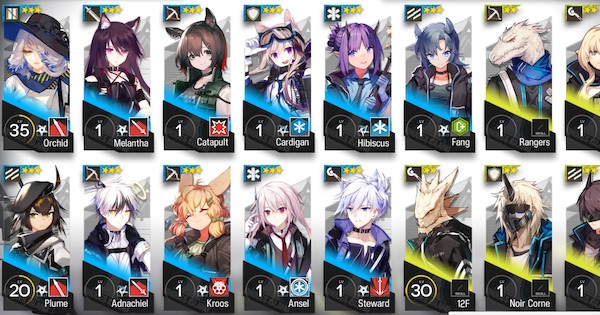
Low-Barrier, High-Value Squad Components
For most low-investment clears, aim to include:
At least one consistent Slow source
At least one skill capable of interrupting or disabling enemies
At least one Operator focused on single-target burst, not sustained DPS
These components remain effective across multiple Contract rotations and Risk combinations.
Final Takeaway
Crisis Contract is not a numbers check.
It is a test of reading the stage’s intent.
If you’re stuck, the issue is rarely:
“My Operators aren’t strong enough”
More often, it’s:
You’re solving the wrong problem
You’re using the right Operator at the wrong moment
Or you’re ignoring what the Contract is intentionally taking away
Once you start treating Risk modifiers as design clues rather than penalties, Crisis Contract becomes far more approachable—even for Doctors with limited resources.
And that’s exactly how it was meant to be played.


- ANY 0.99 PACK$0.73-$0.26$0.99
- ANY 1.99 PACK$1.47-$0.52$1.99
- ANY 2.99 PACK$2.21-$0.78$2.99
- ANY 4.99 PACK$3.69-$1.3$4.99
- ANY 6.99 PACK$5.17-$1.82$6.99
- ANY 9.99 PACK$7.39-$2.6$9.99
- ANY 19.99 PACK$14.78-$5.21$19.99
- ANY 25.99 PACK$19.22-$6.77$25.99
- ANY 29.99 PACK$22.18-$7.81$29.99
- ANY 49.99 PACK$36.97-$13.02$49.99
- 1 Originium$0.73-$0.26$0.99
- 6 Originium$3.69-$1.3$4.99
- 20 Originium$11.08-$3.91$14.99
- 40 Originium$22.18-$7.81$29.99
- 66 Originium$36.97-$13.02$49.99
- 130 Originium$76.99-$23$99.99