Is the Gap Between Free Fire and PUBG Mobile Truly Impossible to Close?
 Avery Wilson


A thoughtful breakdown of the differences between Free Fire and PUBG Mobile, focusing on strategy, audience, and long-term positioning rather than graphics alone. This article explains why their growing gap reflects deliberate design choices—and why both games can succeed without replacing each other.
In the mobile shooter space, Free Fire and PUBG Mobile are constantly compared—but rarely on equal terms.
One is built around lightweight design and mass accessibility.
The other has positioned itself as the gold standard for realism and high-fidelity gameplay.
Over time, that contrast has led many players to ask a familiar question:
Has the gap between Free Fire and PUBG Mobile grown so wide that it simply can’t be closed anymore?
The honest answer isn’t yes or no.
It depends on what you believe that “gap” actually represents.
Different Core Visions Define the Gap in the First Place
From the very beginning, these two games were never chasing the same player.
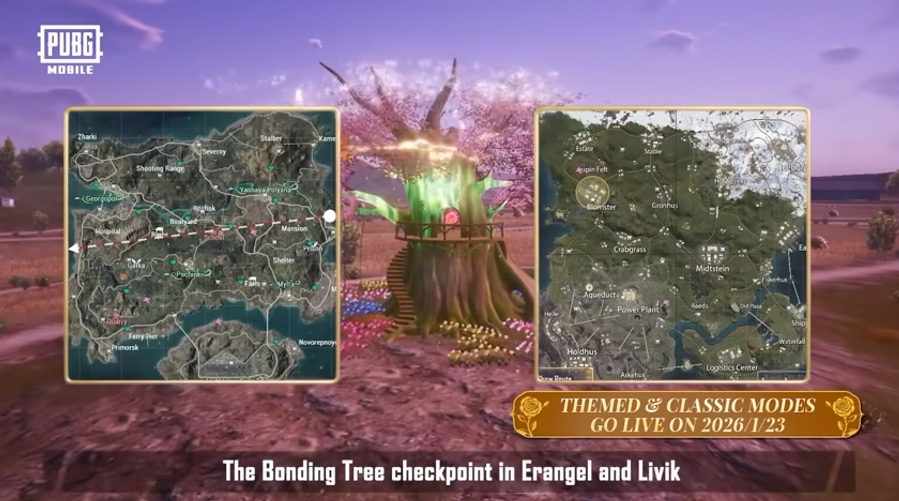
PUBG Mobile is designed around a realistic, tactical experience—authentic ballistics, complex terrain, slower match pacing, and a strong emphasis on competitive fairness and immersion.
Free Fire, meanwhile, made a very different bet: extreme accessibility and speed.
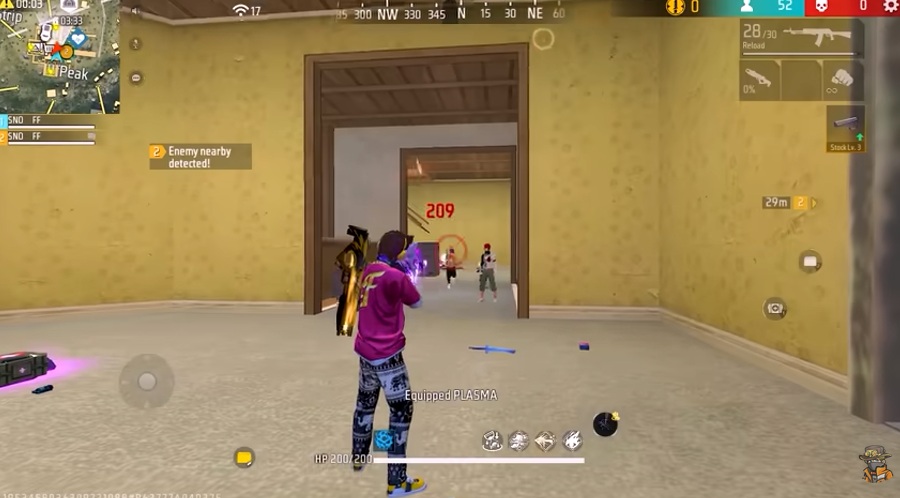
Shorter matches, simplified controls, ability-driven characters, and smooth performance on lower-end devices make it easy to pick up—and hard to put down.
This distinction matters because many things often labeled as “weaknesses” are actually intentional trade-offs.
Free Fire doesn’t lack realism because it failed to reach it.
It avoids realism because realism was never the goal.
Graphics and Technology: A Real Gap, But Not a Decisive One
There’s no denying that PUBG Mobile still leads in several technical areas:
Visual fidelity and lighting
Weapon handling and physical feedback
Large-scale maps with deeper tactical possibilities
For players on high-end devices—especially those who care about competitive integrity—these strengths are obvious. They also reinforce PUBG Mobile’s image as the more “serious” shooter.
But here’s the part that often gets overlooked:
Do these advantages matter equally to most players around the world?
In many emerging markets—Southeast Asia, Latin America, the Middle East, and Africa—hardware limitations, unstable networks, and real-world play conditions change the equation entirely.
In those environments, Free Fire’s technical compromises aren’t flaws.
They’re practical decisions.
From a business and scale perspective, PUBG Mobile’s technical edge has never translated into complete global dominance—and that fact alone says a lot.
Player Ecosystems, Not Graphics, Are the Real Moat
The hardest gap to close isn’t visual.
It’s structural.
Free Fire thrives in regions where:
Entry-level and mid-range devices are the norm
Social play is central, and inviting friends is effortless
Localization goes beyond language and into culture, events, and identity
PUBG Mobile’s audience, by contrast, tends to skew toward:
Higher-end hardware
Players who value competitive balance
Lower tolerance for dramatic system or balance changes
This isn’t about which game is “better.”
It’s about two fundamentally different player ecosystems.
And once those ecosystems take shape, they’re extremely difficult to reverse through graphics upgrades or feature parity alone.
In markets where accessibility matters more than visual fidelity, many players don’t just choose Free Fire—they commit to it. That commitment naturally leads to a deeper focus on progression, resource management, and understanding how Free Fire top up options actually work in practice, especially for players who want to stay competitive without overspending.
Monetization Choices Lock the Divide in Place
Over time, the gap doesn’t shrink—it settles.
Free Fire leans heavily into characters, abilities, cosmetics, and frequent events. It behaves less like a traditional shooter and more like a live-service platform built around engagement and conversion.
PUBG Mobile, on the other hand, remains more conservative with gameplay-impacting monetization, focusing instead on cosmetics, esports, and long-term brand value.
The outcome is predictable:
Free Fire excels at conversion, retention, and light-to-mid spending
PUBG Mobile holds its ground in competitive scenes, content depth, and prestige
Because their business models point in different directions, their future development does too.
They aren’t drifting apart on the same road—they chose different roads years ago.
Maybe the Gap Isn’t “Fixable” Because It Isn’t a Problem
If the question is:
“Can Free Fire become PUBG Mobile?”
The answer is no—and it shouldn’t try.
If the question is:
“Has Free Fire lost to PUBG Mobile?”
The answer is just as clearly no.
In terms of global reach, accessibility, and sheer user volume, Free Fire dominates spaces that PUBG Mobile is unlikely to fully capture.
The real unbridgeable gap isn’t technological.
It’s the result of deliberate strategic choice.
Final Thoughts: This Was Never a Zero-Sum Game
Free Fire and PUBG Mobile aren’t fighting a winner-takes-all battle.
They represent two long-term models of what a mobile shooter can be:
One prioritizes accessibility, speed, and aggressive monetization
The other emphasizes realism, competition, and brand authority
As long as global player demographics remain diverse, this divide won’t disappear—and it doesn’t need to.
The real question was never which game will disappear.
It’s which developers truly understand who they’re building for.


- 100+10 Diamonds$0.82-$0.15$0.97
- 310+31 Diamonds$2.46-$0.43$2.9
- 520+52 Diamonds$4.11-$0.73$4.84
- 1060+106 Diamonds$7.81-$1.38$9.19
- 2180+218 Diamonds$15.56-$2.75$18.31
- 5600+560 Diamonds$39.09-$6.9$45.99
- Weekly Membership$1.79-$0.32$2.11
- Monthly Membership$8.61-$1.52$10.13
- Booyah Pass card$3.18-$0.56$3.74
- Weekly Lite$0.42-$0.07$0.5
- Jovial Symphony King Bundle$4.56-$0.8$5.36
- Queen Joyful Melody Bundle$4.56-$0.8$5.36