

How Brawl Stars Gradually Locks Players Into Win or Loss States
This article breaks down how Brawl Stars uses early control, map structure, and momentum-based systems to gradually lock players into win or loss states. By examining positioning, pressure, and psychological reinforcement, it explains why many matches feel decided well before they end.

PRO PASS
$19.33
$24.99-$5.66Brawl Pass
$6.95
$8.99-$2.04Brawl Pass Plus
$10.05
$12.99-$2.9430 Gems
$1.55
$1.99-$0.44



Many Brawl Stars matches feel decided long before the final score appears. Players often describe the same experience: the game starts evenly, no one has been eliminated yet, and the scoreboard looks fine — but something already feels off. Movement becomes restricted, shots feel riskier, and every push seems to fail.
That feeling isn’t imaginary. It’s structural.
In Brawl Stars, wins and losses are rarely determined by a single mistake or a late-game play. Instead, the game gradually pushes teams into stable win or loss states through a series of interconnected systems that reward early control and make recovery increasingly difficult. Understanding how this lock-in happens explains why so many matches feel “over” well before they officially end.
Brawl Stars Is Designed to Create Momentum, Not Chaos
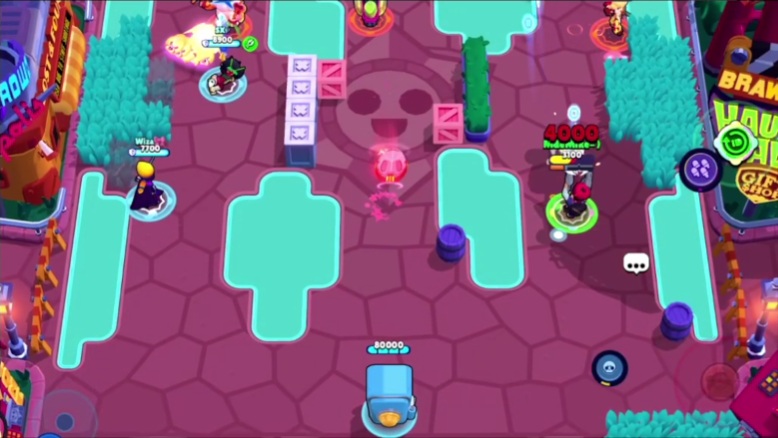
At a glance, Brawl Stars looks fast, chaotic, and reactive. Short matches, small maps, and constant action give the impression that anything can happen at any time. But beneath that surface is a carefully controlled system that prioritizes stability over randomness.
This isn’t accidental. The game is built to feel exciting while still producing consistent outcomes. Map layouts, spawn distances, ability cooldowns, and objective mechanics all work together to amplify early advantages and suppress repeated comeback attempts.
If you want to understand the foundation of this approach, it helps to look at why Brawl Stars works as a system. The same design choices that make the game accessible and addictive also create strong momentum effects that are difficult to reverse once established.
Control Forms Before the Scoreboard Changes
One of the biggest misconceptions players have is believing that momentum begins when points are scored or eliminations happen. In reality, control often forms much earlier.
The opening seconds of a match establish positioning, space ownership, and pressure lanes. Teams that claim central ground, deny key angles, or force opponents into defensive movement immediately shape how the rest of the match unfolds. Even if no damage is dealt, the losing side begins reacting instead of initiating.
This is why early movement matters so much. The patterns that decide a match usually start before players consciously register them. We explored this in detail when breaking down what decides a Brawl Stars match in the first 10 seconds, where positioning and space control quietly determine which team gets to dictate the pace.
Once that initial structure is set, the game starts reinforcing it.
How Early Control Turns Into Structural Advantage
After control is established, several systems begin stacking in favor of the leading team.
First, ability pressure increases. Teams holding space can use supers offensively, while the losing team is forced to spend abilities defensively or waste them just to survive. This creates a resource imbalance that compounds over time.
Second, respawn and re-entry mechanics punish failed pushes. Players attempting to reclaim lost ground must walk longer distances, re-enter predictable choke points, and often arrive staggered rather than together. Even small timing gaps give the controlling team more opportunities to reset the advantage.
Third, map geometry works against recovery. Many Brawl Stars maps are intentionally asymmetrical in how control flows. Once pushed back, teams often lose access to safe angles and are forced into narrower lanes where defensive fire is more effective.
Individually, none of these systems guarantee victory. Combined, they steadily push the match toward a stable outcome.
4Why Comebacks Feel So Rare Even When Skill Is Equal
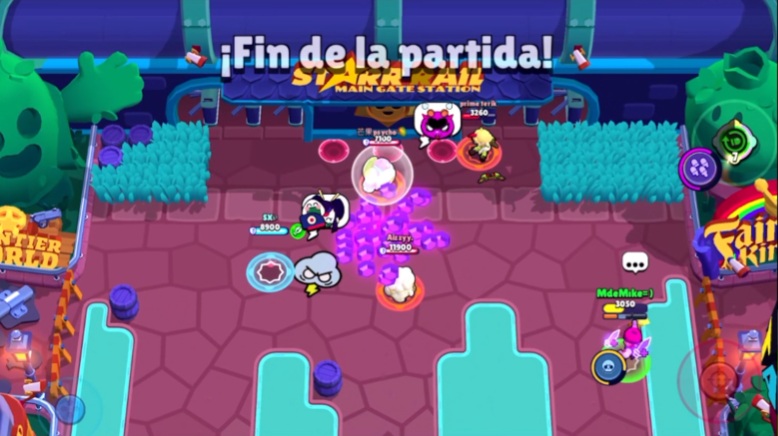
Players often assume that failed comebacks are the result of poor execution. In reality, the game makes recovery structurally expensive.
To regain control, the losing team usually needs to succeed at multiple actions in sequence: coordinated movement, clean ability usage, and favorable trades — all without making a single mistake. Meanwhile, the leading team only needs to defend and punish overextensions.
This asymmetry is intentional. Brawl Stars rewards teams that establish control by lowering the effort required to maintain it. At the same time, it raises the execution threshold for teams trying to break back in.
As a result, matches don’t feel volatile. They feel “locked.”
Psychological Pressure Reinforces Mechanical Lock-In
Beyond systems and mechanics, player behavior plays a major role in how lock-in states persist.
When players sense they’re losing control, they often rush decisions. Shots are fired early, supers are used reactively, and positioning becomes desperate. These behaviors aren’t irrational — they’re a natural response to pressure — but they play directly into the hands of the controlling team.
Meanwhile, players on the winning side feel less urgency. They wait, punish mistakes, and let the game come to them. Over time, this difference in mindset further stabilizes the match outcome.
Brawl Stars doesn’t just lock players mechanically. It nudges them psychologically toward reinforcing the state they’re already in.
6Why the Game Feels Fair Even When Outcomes Are Predictable
One of the most impressive aspects of Brawl Stars’ design is that, despite these lock-in mechanics, the game rarely feels unfair.
Matches are short. Losses are quick. Players always feel like they had opportunities — even if those opportunities were narrower than they realized. This keeps frustration manageable and encourages players to queue again.
From a design perspective, this balance is deliberate. The game creates predictable outcomes without removing the illusion of agency. Players still feel involved, even when the system has already tilted heavily in one direction.
This is a key reason why Brawl Stars maintains long-term engagement despite its strong momentum mechanics.
Lock-In Is a Feature, Not a Flaw
It’s tempting to view these systems as problems to be fixed. But from a design standpoint, lock-in is essential to what makes Brawl Stars work.
Without momentum, matches would feel random. Without stability, skill expression would be diluted. By gradually guiding players into win or loss states, the game ensures that early decisions matter and that matches resolve cleanly rather than dragging on indefinitely.
The result is a game that feels fast, decisive, and emotionally engaging — even when outcomes are shaped long before the final moments.
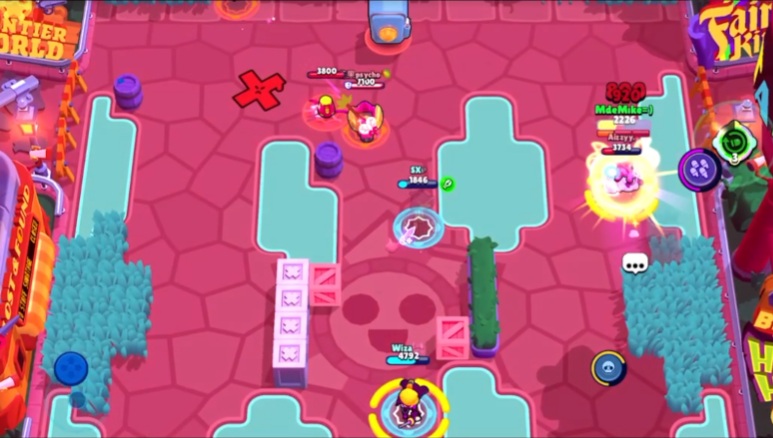
8Understanding the Structure Changes How You Play
Recognizing how Brawl Stars locks players into outcomes doesn’t mean giving up when things go wrong. It means understanding where effort has the highest impact.
The most important decisions happen early. Control matters more than damage. Positioning matters more than flashy plays. Once momentum is established, the game becomes less about creating opportunities and more about defending or breaking structure.
Sage Martinez is a veteran Brawl Stars strategist with extensive experience in high-level ranked play, competitive team coordination, and long-term meta analysis. With years dedicated to studying Supercell’s design patterns, update cycles, and balance philosophy, Sage provides data-driven insights that help players understand the evolving meta and improve their competitive performance. Their work focuses on translating complex gameplay mechanics into clear, actionable strategies for players at every skill level.
Players who understand this don’t just play better — they read matches more clearly. They know when to push, when to reset, and when a match is already tilting out of reach.
And that awareness is often the difference between frustration and mastery.
Brawl Stars isn’t about constant reversals or dramatic last-second heroics. It’s about structure, pressure, and momentum. Once you see how the game gradually locks players into win or loss states, the flow of each match becomes easier to understand — even when the outcome isn’t the one you hoped for.