

Final Circle Survival Psychology: In the Last 50 Meters, Does the First Shot Lose the Game?

This article breaks down the psychology of surviving Free Fire’s final circle from a high-level player perspective. It explains why the last 50 meters are driven by information control, concealment, third-party timing, and disciplined decision-making more than raw aggression, while showing when firing first is correct and when it only exposes you to everyone else.

100+10 Diamonds
$0.73
$0.97-$0.24310+31 Diamonds
$2.08
$2.9-$0.82520+52 Diamonds
$3.51
$4.84-$1.331060+106 Diamonds
$6.53
$9.19-$2.66



Plenty of Free Fire players can make it into the final circle.
Far fewer know how to close the game once they get there.
That difference is not just about aim. It is not even mainly about aim.
By the time the last zone collapses, the match stops behaving like a normal fight. The same aggression that carried you through the mid game can suddenly turn into the reason you finish second instead of first.
At that stage, the real battle is not just mechanical. It is psychological.
You are managing visibility.
You are reading impatience.
You are judging whether a knock is actually worth the information you give away.
You are deciding whether to take the shot now, or let someone else make the first mistake.
That is why the question matters:
In the last 50 meters, does the first player to fire actually lose?
Not automatically.
But in a lot of final circles, the first player to reveal too much ends up dying first.
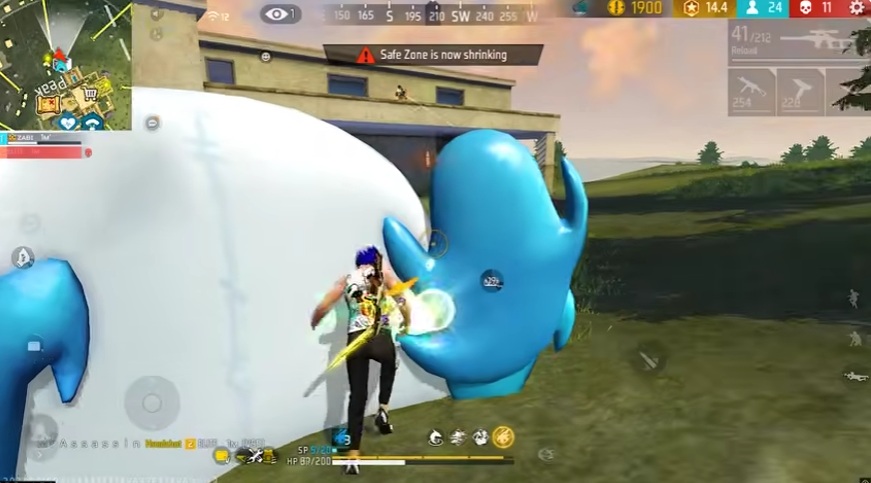
The Final Circle Is an Information Fight Before It Becomes a Gunfight
Everyone talks about mechanics in endgame, and sure, mechanics still matter.
If your tracking is bad, if your crosshair placement is sloppy, if you panic your spray, you are not surviving high-pressure situations for long.
Still, raw mechanics stop being the main thing separating players once the circle gets tiny.
What really takes over is information control.
At that point, nobody is clueless anymore. Everyone knows enemies are close. The important difference is who knows a little more than everyone else.
Who has a better read on the remaining positions?
Who has been seen, and who has not?
Who still has a clean angle nobody has confirmed?
Who knows where the third player probably is?
Who still has the right to choose when the fight starts?
That last one matters more than most people realize.
The final circle often goes to the player who keeps that choice the longest, and our information control breakdown explains why sound, footsteps, and vision do not create the kind of advantage many players assume.
Why Players Feel Compelled to Shoot the Moment They See Someone
This is where a lot of matches get thrown.
Not because the player lacks skill, but because the moment creates bad decision-making.
A target flashes across the screen and the brain instantly says, “Shoot now or lose the chance.”
You crack somebody and immediately feel like you have to finish.
You worry that if you hesitate, they will see you first.
You tell yourself that taking initiative is always better than waiting.
All of that feels reasonable in the moment.
In the final circle, though, that urge is often exactly what gets punished.
The problem is not that the first burst cannot hit.
The problem is that your first burst usually costs something.
Once you fire, people now know your angle.
They know your timing.
They know what you are focusing on.
They know roughly how exposed you are.
And if multiple players are still alive, somebody is already thinking about how to punish that.
That is the hidden cost of opening fire too early.
You think you are applying pressure.
Sometimes all you are really doing is turning yourself from a hidden threat into the most readable player in the lobby.
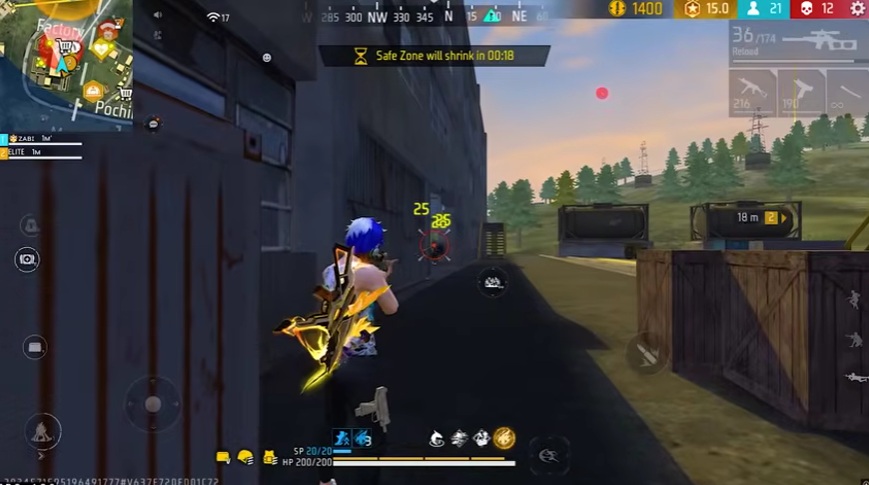
Situations Where the First Shot Is Usually a Bad Trade
A common losing spot in the final 50 meters looks like this:
You see someone.
You can probably tag them.
You cannot realistically finish them.
You fire anyway.
That is the kind of sequence that feels active but usually creates more problems than it solves.
The same goes for moments where you still have not located the third player. This is one of the most common endgame mistakes in Free Fire. A player locks onto the one enemy they can see, starts spraying, and only then realizes the real danger was another angle they never checked.
That is not bad luck. That is tunnel vision.
Weak cover makes it even worse. If you are playing from a thin tree, a soft corner, a half-rock, or any spot that does not let you reset fast, revealing yourself early is often just an invitation to get collapsed on.
The problem also shows up when the target is visible but safe enough to escape. You may land damage, maybe even force armor pressure, but if they can break line of sight, heal, and let someone else punish you, then you won nothing.
This is why not every “good shot” is a good decision.
In the final circle, damage that cannot be converted often ends up being expensive.
When Firing First Is Absolutely the Right Play
Patience is not the same thing as passivity.
The final circle is not about refusing to fight. It is about choosing the right moment to become visible.
Some windows are too good to pass up.
A player caught healing, reviving, reloading, or rotating through open ground is vulnerable in a very different way from somebody comfortably holding hard cover. In those situations, shooting first is not reckless. It is efficient.
The same goes for moments when you have already mapped the rest of the circle. If you know where the last two players are and one of them gives you a clean opening, then your first shot is no longer a gamble. It is a controlled conversion.
High-ground advantages also change the math. Strong cover, head-glitch angles, a Gloo setup that lets you reset instantly, or a forced zone path can all make first shot the correct move.
And once you have already been spotted, the value of waiting drops fast. At that point, hesitation can be more dangerous than commitment.
So yes, sometimes you absolutely should shoot first.
Just not because you are impatient.
Not because you are nervous.
Not because “maybe this is my chance.”
You do it because the opening is real, the reward is high, and the risk is already mapped out.
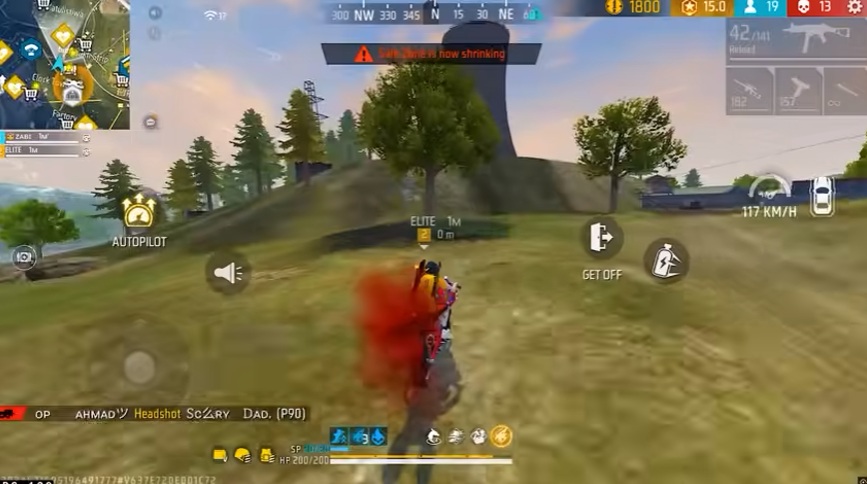
Third-Party Timing Wins More Endgames Than Most Players Admit
If you ask experienced players how final circles are really won, a lot of them will tell you the same thing:
The cleanest kills usually come after someone else starts the fight.
That is why third-party timing matters so much.
By the final 50 meters, nobody is comfortable. Armor is often low. Utility may be running thin. Players are hyper-focused on the person directly in front of them. Once a trade begins, decision quality drops fast.
That creates windows.
Not big windows.
Sometimes not even full seconds.
Just enough time for somebody patient and disciplined to step in and clean up the entire situation.
A good third party is not just “hearing shots and running toward them.” It is recognizing the moment when two players are too locked into each other to defend against a fresh angle.
That usually happens when:
both sides have committed walls
one player gets cracked and immediately tries to reset
zone movement forces two players out at once
a knock happens and somebody overpeeks for the finish
the fight has gone just long enough that attention is fully tunneled forward
This is why endgame patience is such a weapon.
Weak players hear shots and rush the noise.
Better players wait half a second, read the exchange, and enter when the fight has already stripped both sides of their flexibility.
That is not passive play.
That is timing with discipline.
Hidden Positioning Is Often More Valuable Than a Fast Knock
One of the biggest endgame truths in Free Fire is that being alive with options is often stronger than forcing a low-quality elimination.
As long as your position is not fully revealed, you still control possibilities.
You can decide whether to wait.
You can decide whether to third-party.
You can decide whether to force movement.
You can choose your side of the circle.
You can keep making the other players guess.
The moment that concealment disappears, those options shrink.
That is why strong endgame players do not create noise for no reason.
They do not overpeek just to confirm a target they already know is there.
They do not empty half a mag for chip damage that changes nothing.
They do not run unnecessary lines when stillness is stronger.
Concealment gets mistaken for passivity all the time.
It is not passive.
It is leverage.
And leverage wins an absurd number of final circles.
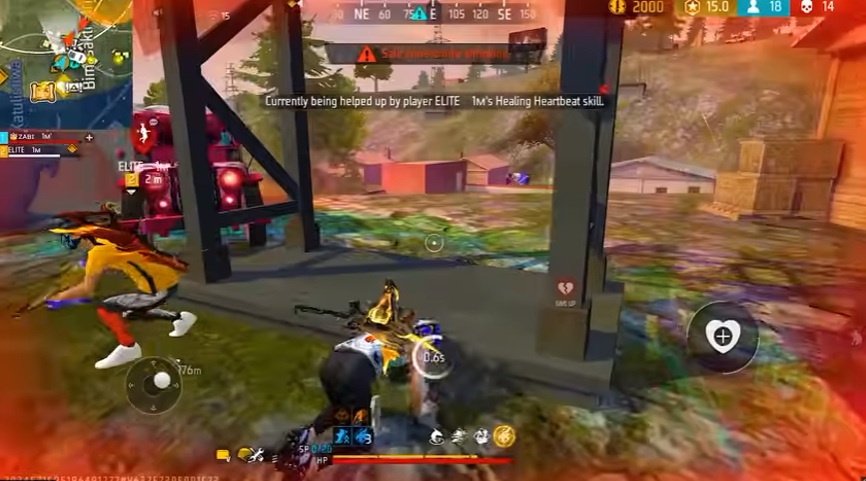
The “Second Position” Mindset Is What Separates Good Endgame Players From Great Ones
A weak player thinks about their current cover.
A strong player is already thinking about the next one.
That is what second-position awareness really is.
Before taking the first shot, the question should not just be “Can I win this trade?”
It should also be “What happens to this position after I reveal myself?”
Because the answer is often simple:
it gets worse immediately.
Maybe someone wide-swings you.
Maybe the third player hard-scopes your wall.
Maybe your angle is now useless.
Maybe the next zone pulls you into the open.
Maybe your first burst works, but staying there for the second one gets you killed.
This is why high-level players rarely stay planted after starting a fight. They burst, shift, wall, reset, and only then decide whether the fight should continue.
Many endgame deaths do not happen because the first peek was bad.
They happen because the player stayed where everyone expected them to stay.
Good Aim Gets You Into Endgame. Defense Keeps You Alive There.
A lot of players still think final circles are mostly about who is more cracked.
That is true right up until the moment multiple angles open at once.
Then the game changes.
At that stage, survival depends just as much on defensive discipline as mechanical skill:
positioning
damage control
angle denial
reset timing
wall management
knowing when not to challenge
Good aim can carry you deep into the match, but without the defensive habits in Gloo Wall Advanced Guide, you are going to have a hard time surviving the final collapse.
That is especially true once several players still have line of sight. One clean spray means very little if you cannot survive the pressure it creates.
In real endgames, defense is not separate from offense.
It is what makes good offense possible.
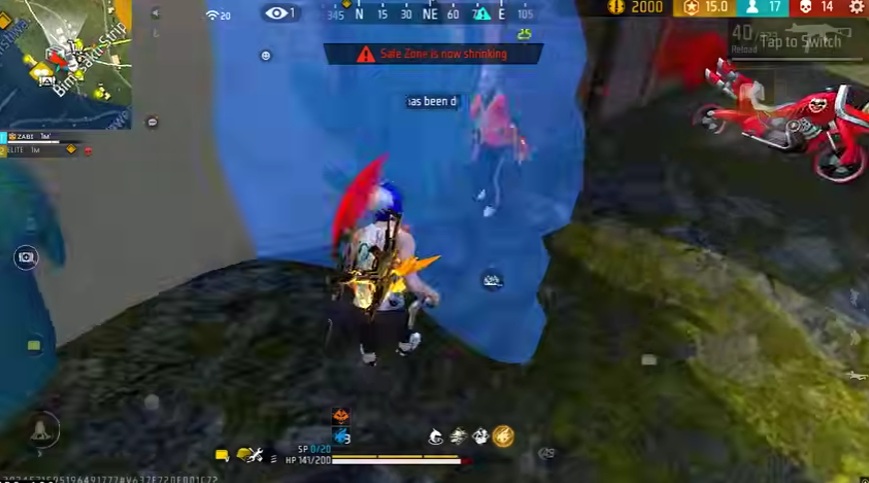
A Simple Endgame Check Before You Pull the Trigger
When the circle gets tiny and you are tempted to take the first shot, run through a quick mental check.
Do I know where the other remaining players probably are? Strong endgame decisions usually come from better rotation reads earlier in the match, and if you are also searching for a trusted free fire diamond seller, our Safe Zone Prediction and Rotation guide is worth reading next.
Can I actually finish this target, or am I only damaging them?
What happens to me the moment I reveal this angle?
Do I have a second position if this spot becomes unplayable?
If I wait three more seconds, does my position improve or get worse?
Those questions sound basic.
In practice, they separate players who win final circles from players who panic through them.
Because not shooting is not always hesitation.
Sometimes it is control.
Sometimes the smartest thing you can do is let another player become the loudest person in the circle first.
What Elite Endgame Players Really Win With
Not just aim.
Not just confidence.
Not just aggression.
And definitely not because they always shoot first.
They win with discipline under pressure.
They understand that the final 50 meters are about exposure management more than highlight plays.
They let other players get greedy.
They let someone else burn the first wall.
They let somebody else overpeek for the finish.
They let the circle force mistakes out into the open.
Then they act when the fight is no longer a guess.
That is the real answer.
Does the first player to fire lose?
Not always.
But in the final circle, the first player to reveal too much very often does.
And that is why the best Free Fire endgame players are not just the ones with the sharpest mechanics.
They are the ones who know exactly when a shot helps them win — and when it only helps everyone else find them.