

Last Asylum: Plague Alliance Guide – R4 Roles, R5 Duties and Officer Titles (2026)

R4 and R5 are the ranks that actually run an alliance in Last Asylum: Plague, and most players only find out what they do after being promoted or kicked. This guide explains every rank and officer title — God of War, Diplomat, Recruiter, Inspector and Goddess — how to become R4, which alliance features matter, and how to run Alliance Duel, Elixir Scramble and Hunt Battle without wasting resources.

99 Banknote
$0.79
$0.99-$0.2499 Banknote
$3.91
$4.99-$1.08999 Banknote
$7.82
$9.99-$2.171499 Banknote
$11.73
$14.99-$3.26





What Is an Alliance in Last Asylum: Plague?
An alliance is your main support system: up to 100 players who share bonuses, defend each other and compete in alliance events together. A normal alliance gives you:
- Alliance help that cuts construction and research timers
- Alliance research, alliance gifts and event rewards
- Reinforcements, rallies and group attacks
- Shared map presence and a safer place to grow as a new player
The help button alone adds up over months, and alliance research grows more valuable as your account develops. The real value, though, is coordination. Events, territory disputes and server politics are much easier when you're not playing alone.
Why Playing Solo Long-Term Is Usually a Bad Idea
Solo players miss too much: help, alliance rewards, coordinated rallies, protection from stronger players and organized progress in events like Alliance Duel, Elixir Scramble and Hunt Battle.
Not everyone enjoys chat pings, Discord pressure and forced teleports, and that's reasonable. The goal isn't to join any alliance. It's to join one that matches your activity level, spending level and playstyle.
Alliance Ranks Explained: R1 to R5
Alliance ranks aren't decoration. They signal trust, activity and responsibility. Every alliance uses them a little differently, but most follow this structure:
| Rank | Usually given to | Typical role |
|---|---|---|
| R5 | Alliance leader | Sets direction and rules, runs diplomacy, appoints and removes R4s and titles |
| R4 | Officers | Accept and remove members, start rallies, manage territory, post announcements |
| R3 | Trusted long-term members | Core event players, usually without management duties |
| R2 | Stable active players | Donate, help and join events |
| R1 | New, trial or inactive members | Basic membership while they prove themselves |
An alliance can have several R4s at once, but the number of R4 slots is limited. Leveling up Alliance Gifts raises it (level 10 adds two more slots). A healthy alliance has clear promotion standards; a messy one promotes randomly or never promotes anyone.
What Does R4 Mean in Last Asylum: Plague?
R4 is the alliance officer rank. R4s handle recruiting, applications, announcements, event reminders, member discipline and Alliance Duel coordination. In a serious alliance, R4 isn't a trophy; it's a management job.
R4 daily duties
- Check applications and review inactive members
- Remind members to donate and use alliance help
- Answer beginner questions
- Watch for attacks and rule violations
R4 weekly duties
- Plan Alliance Duel and update announcements
- Review event participation and adjust ranks
- Coordinate diplomacy with the Diplomat and R5
Common R4 mistakes
- Kicking active low-Might players while ignoring inactive high-Might ones
- Making Discord mandatory without posting anything useful there
- Several officers giving conflicting orders
- Treating R4 as status instead of responsibility
What Does R5 Mean in Last Asylum: Plague?
R5 is the alliance leader. The R5 sets the rules, officer structure, diplomacy, event expectations and recruitment standards. It also decides what kind of alliance this is: casual, beginner-friendly, semi-competitive, war-focused, whale-heavy or built around server politics.
The biggest R5 mistake is judging members only by Might. A player who donates daily, helps, saves resources for the right event day and follows instructions is often worth more than a higher-Might player who ignores everything.
How to Become R4 in Last Asylum: Plague
Promotion is decided by the R5 and existing officers. Most alliances promote players who:
- Donate and use alliance help every day
- Score consistently in Alliance Duel
- Follow Raid Day and rally orders
- Help new members without drama
- Are online during hours the current officers aren't
Don't wait to be noticed. Ask your R5 what the promotion standard is, and offer to take a specific job such as recruiting, event reminders or diplomacy. R4 slots are limited, so officers promote people who make their work easier.
Officer Titles: God of War, Diplomat, Recruiter, Inspector and Goddess
On top of ranks, the R5 can hand officers named titles. Their exact permissions depend on the current in-game system, so always check the title description in-game. Some carry real permissions; others work mainly as internal labels.
| Title | Main job | Give it to |
|---|---|---|
| God of War | Rally targets, march timing, Raid Day assignments | Someone who understands combat and gives clear orders |
| Diplomat | NAPs, borders, accidental hits, talks with other R4/R5 teams | The calmest officer, not the loudest |
| Recruiter | Finding and screening new members | An officer online across many hours |
| Inspector | Event participation, rule compliance, pre-event prep checks | An organized officer who tracks data fairly |
| Goddess | Support, morale, reminders or honor; varies by alliance | Check the in-game permission list first |
God of War
The God of War is the war commander, and in a battle-focused alliance it's one of the most important posts. This officer decides when to fight, who to target, who opens rallies and when high-power players move. They also keep lower-Might players out of fights they can't win and make sure nobody hits protected alliances. Give the title to someone who can give clear orders, not just to the account with the highest Might.
Diplomat
The Diplomat handles everything outside the alliance: NAP agreements, territory boundaries, resource tile disputes, accidental attacks, rally complaints and war warnings. A bad Diplomat turns every mistake into a fight. A good one keeps the alliance safe without looking weak, so give it to the calmest officer, never the one who enjoys arguing in world chat.
Recruiter
The Recruiter finds new members and filters applications. It matters more than most players think, because bad recruiting fills an alliance with dead accounts, bots and troublemakers. A Recruiter should check activity, Might growth, event participation, time zone, donation habits and whether the player fits casual or competitive expectations. Recruitment announcements can usually be posted by R4/R5 or members with recruiting permission. If you can't post one, ask your officers.
Inspector
The Inspector keeps internal standards. They track who joined events, whether members prepared before Alliance Duel or Raid Day, and whether alliance rules are being followed. In practice, the Inspector's records are what make promotions and kicks fair instead of personal.
What Does Goddess Do in Last Asylum: Plague?
Goddess is usually a support, community or honor role. Alliances use it for member support, event reminders, new-player guidance, chat activity and morale. Its exact function depends on the alliance and on current in-game permissions. The safe rule: if the title carries no special permission, treat it as an internal alliance title.
Alliance Features Worth Knowing
Alliance Gifts
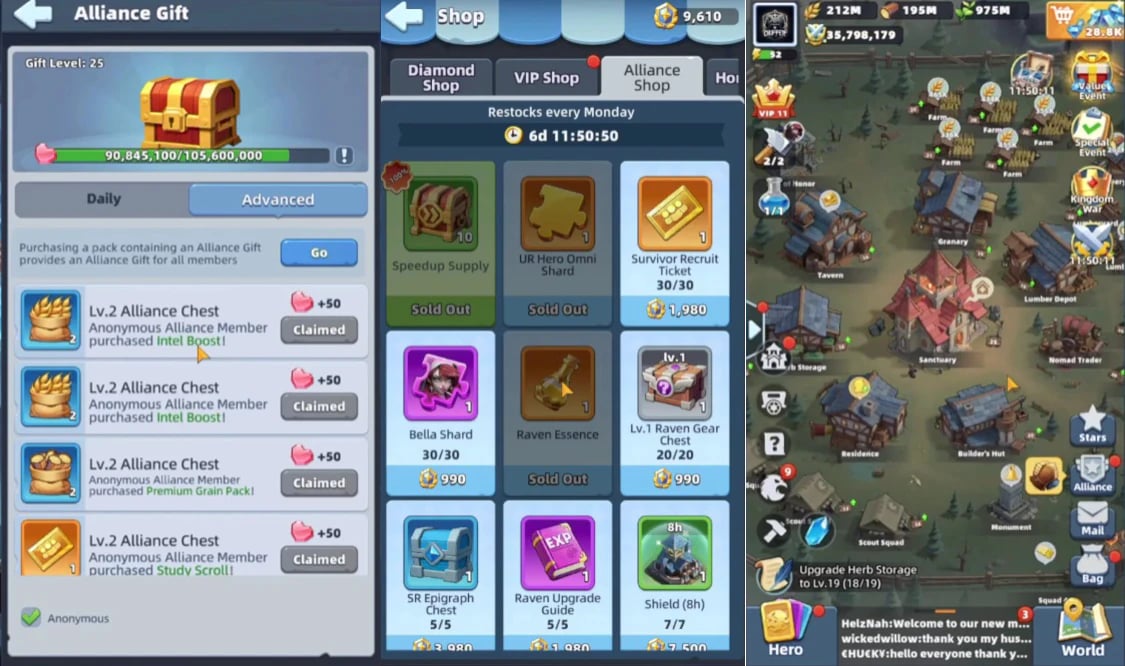
Alliance Gifts level up as members earn gift chests, which come from defeating Elite and Wandering Blight and from members buying eligible packs. Higher gift levels unlock real perks: level 5 lets R4 and above send alliance mail, and level 10 adds two extra R4 slots. An active, growing alliance levels its gifts faster, and every member benefits.
Alliance Research
Alliance research splits into development bonuses (construction, research, gathering, production) and war bonuses (troop capacity, training speed, rally speed, combat stats). R4s should tell members which branch the alliance is prioritizing, so donations aren't scattered.
Auto Rally
Once unlocked through alliance research, Auto Rally lets members join rallies automatically, even while offline. Most alliances ask members to auto-join officer rallies only, not every rally, and to switch it off before defensive events so their troops aren't away from home when attacks land.
How to Join the Right Alliance
The right alliance isn't always the strongest one on the server. It's the one that fits your activity, spending and goals.
What New Players Should Look For
Prioritize activity over total Might. Good signs:
- Active chat and recently updated announcements
- R4/R5 online often
- Help requests filled quickly
- Clear event reminders
- Beginner questions answered without insults
If you're F2P or a low spender, look for an alliance that values participation and doesn't expect every member to grow like a whale. If you're still in your first week, our Last Asylum: Plague beginner guide covers squad building and resource priorities alongside alliance choice.
How to Spot a Bad, Dead or Bot Alliance
- Lots of members, but nobody chats or answers questions
- Old announcements and unorganized events
- R4/R5 rarely online
- Members attack whoever they want; rules are unclear
- Kicks with no explanation
- New members pushed into unrelated games or suspicious outside groups
If something feels like recruitment bait, leave.
Why Did I Get Kicked From My Alliance?
The usual reasons are inactivity, not donating or using help, missing events, low Alliance Duel points, slow Might growth, ignoring announcements, refusing a required Discord, attacking protected targets or causing chat drama.
Not every kick is fair. Some alliances remove active players simply because they want faster growth or bigger spenders. If you're active and still keep getting kicked, you may not be the problem. Look for an alliance whose standards match how you play.
Spending, F2P Players and Top Up Expectations
Spending cultures differ. Relaxed alliances welcome F2P and low spenders, while competitive ones expect faster growth and stronger event scores. If you do spend, keep it within your own budget. A Last Asylum: Plague top up can speed up heroes, resources and event progress, and eligible pack purchases also feed Alliance Gifts for everyone. But it doesn't replace donating, using help, saving resources for the right event day and following Raid Day orders.
For leaders, spending should never be the only standard. A reliable F2P player who joins events and follows commands can be worth more than a spender who ignores the rules.
Alliance Events: Alliance Duel, Elixir Scramble and Hunt Battle
Alliance events show whether an alliance is organized or chaotic. A coordinated alliance gets more rewards from the same players.
| Event | Format | Coordinated by |
|---|---|---|
| Alliance Duel | Six themed scoring days ending in Raid Day | R4/R5 |
| Elixir Scramble | 30-minute alliance vs alliance PvP battlefield | R4/R5 and God of War |
| Hunt Battle | Wave-style cooperative event, 20+ members needed | R4/R5 |
Alliance Duel
Alliance Duel runs Monday to Saturday. Each day scores a different kind of activity, so the whole event is about saving the right resources for the right day:
| Day | What scores | Tip |
|---|---|---|
| 1. Enhance Raven | Raven resources, rallies and squad actions | Hold Raven items until after reset |
| 2. Territory Development | Building upgrades | Start long upgrades early so they finish inside the window |
| 3. Tech Research | Research and gear activity | Use research speedups after reset |
| 4. Hero Growth | Recruitment, hero levels, stars and skills | Save tickets, shards and EXP all week for this day |
| 5. War Preparation | Troop training and preparation tasks | Train troops, heal and stock shields for Raid Day |
| 6. Raid Enemy | Attacks, rallies and objectives | Follow command; never attack randomly |
The most common mistake is spending on the wrong day. Check each day's scoring list in-game, since some actions count on more than one day, and stop pushing once your tier cap is reached.
Elixir Scramble
Elixir Scramble is a 30-minute PvP battle between two alliances on a shared battlefield. Points come from holding buildings, gathering from resource points and killing enemy Doctors. Only R4 and R5 can assign the roster, and three details decide most matches:
- Roster sets matchmaking. Opponents are matched on the highest historical Might among registered players, so one idle high-Might account can pull you into a much stronger opponent.
- Early buildings are worth the most. Held buildings score over time, so a building taken in the first minutes beats one captured near the end.
- Save strength for the final phase. The highest-value building, the Elixir Castle, only opens late, and that's where the whole team should converge.
Before it starts, members need to know who attacks, who gathers, who defends and when to regroup. A messy team turns the event into free points for the enemy.
Hunt Battle
Hunt Battle is a wave-style cooperative event started by R4 or R5. It needs at least 20 participating members, and once a difficulty is chosen it's locked for the whole challenge. That's why good coordination means:
- Picking a difficulty that matches who will actually be online, not your best-case roster
- Announcing the start time well in advance
- Keeping troops flowing and focusing targets
- Never choosing the top difficulty just for ego
Alliance Duel Strategy
Run Alliance Duel for the alliance you actually are. Don't run a casual alliance like a top war alliance, or a competitive one like a social club.
Casual Alliance Strategy
Aim for steady stage rewards, not perfect scores. Post the daily task before reset, tell members what to save, encourage basic participation, and never force spending or shame F2P players. A simple announcement is enough:
Today is Tech Research day. Use research speedups after reset. Donate to alliance research. Save hero tickets for Hero Growth day.
Competitive Alliance Strategy
Competitive alliances don't need constant yelling; they need systems:
- A weekly resource-saving cycle everyone follows
- Score tracking by the Inspector
- Key players assigned to key days
- Raid Day targets set by the God of War
- Minimum participation, promotions based on reliability, and removal of repeat no-shows
Raid Day Discipline
Raid Day is where bad alliances expose themselves. The basic rules:
- No attacks or rallies without orders
- Never hit protected alliances
- High-power players hit first; lower-power players support or clean up
- Check hospital capacity, heal before fighting and shield if needed
- Confirm your teleport position before engaging
One reckless player can create a diplomatic problem for the entire alliance.
Recruitment Guide for R4 and R5 Leaders
"Need active players" in world chat tells people almost nothing. A good recruitment post filters the right people in and the wrong people out by stating minimum Might, activity expectations, main time zone, casual or competitive, whether Alliance Duel and Discord are required, whether F2P players are welcome, and whether R4 spots are open. Bad recruiting creates bad retention.
Casual Alliance Recruitment Template
Active alliance recruiting daily players. Join if you donate, help, and participate in Alliance Duel. Discord preferred, not mandatory. F2P welcome if active.
Competitive Alliance Recruitment Template
Competitive alliance recruiting active fighters. Alliance Duel participation required. Discord required for event coordination. R4 spots available for reliable players.
How to Screen New Members
Don't screen by Might alone. Look at login frequency, Alliance Duel scores, donation and help habits, growth over time, chat behavior and whether they follow rally calls. Whales help, but a toxic whale can damage an alliance faster than a quiet F2P player ever will.
Kick Rules, Discipline and Communication
Good management isn't just kicking people; it's setting clear rules before enforcing them. Common kick standards:
- Offline for 2–3 days without notice
- Refusing to donate or missing major events repeatedly
- Ignoring warnings or attacking protected targets
- Causing repeated conflict
Don't use slow Might growth as the only reason; active F2P players still add donations, event points and Raid Day discipline. If a member hits another alliance by mistake, the Diplomat or R5 should handle it privately. Officers sending different messages makes the alliance look unstable.
Announcements work best when they're short and cover the event, what to save, what to spend, when to act and who's leading. Once your Alliance Gifts level allows it, R4s can also send alliance mail for bigger updates.
Today: Tech Research. Use research speedups only after reset. Donate to alliance research. Save hero tickets for Hero Growth. Raid targets posted before Saturday.
Discord helps competitive alliances with reminders, target screenshots and R4 coordination. For casual alliances, clear in-game announcements are usually enough.
Conclusion: A Strong Alliance Is Built, Not Found
In Last Asylum: Plague, your alliance affects growth, safety, rewards and battles far more than any single purchase. Don't join on Might alone. Look for activity, clear rules, reliable R4/R5 officers and organized events.
For leaders, the job is systems: fair recruiting, clear titles, Alliance Duel plans, Raid Day discipline and kick rules members understand. Join the alliance that fits your playstyle, and if you lead one, give members a reason to stay.