

Why Wuthering Waves Has Dialogue Delays: Animation & Dubbing
When experiencing the storyline of Wuthering Waves, many players using the auto-play feature often encounter an immersion-breaking phenomenon: after a character finishes speaking, the camera doesn't immediately cut to the next scene, leaving a brief pause and delay.
Is this a technical stutter caused by resource loading, or is it designed to match the longest language dub? By diving into the dialogue performance across multiple language versions in the game, it becomes clear that the underlying logic involves a complex tug-of-war of parallel modules within the game's industrialized pipeline.

- Purchase Limit 0/1
6480 + 1600 Lunites Limited Offer
$70.99
$99.99-$29 Lunitas All-In-One Bundle
$164.82
$200.94-$36.12Insider Channel
$7.39
$9.99-$2.6Connoisseur Channel
$14.78
$19.99-$5.21
Focusing on "Light Performances": Structural Reservations Over Technical Stutters
The dialogue delay phenomenon is predominantly concentrated in the game's "light performance" segments.
Unlike "polished performances" that require motion capture and manually keyframed micro-expressions, "light performances" mainly rely on real-time rendering. The system automatically calls upon basic action modules like turning around, shrugging, or pondering during dialogue, advancing the narrative through shot-reverse-shot or multi-camera switching.
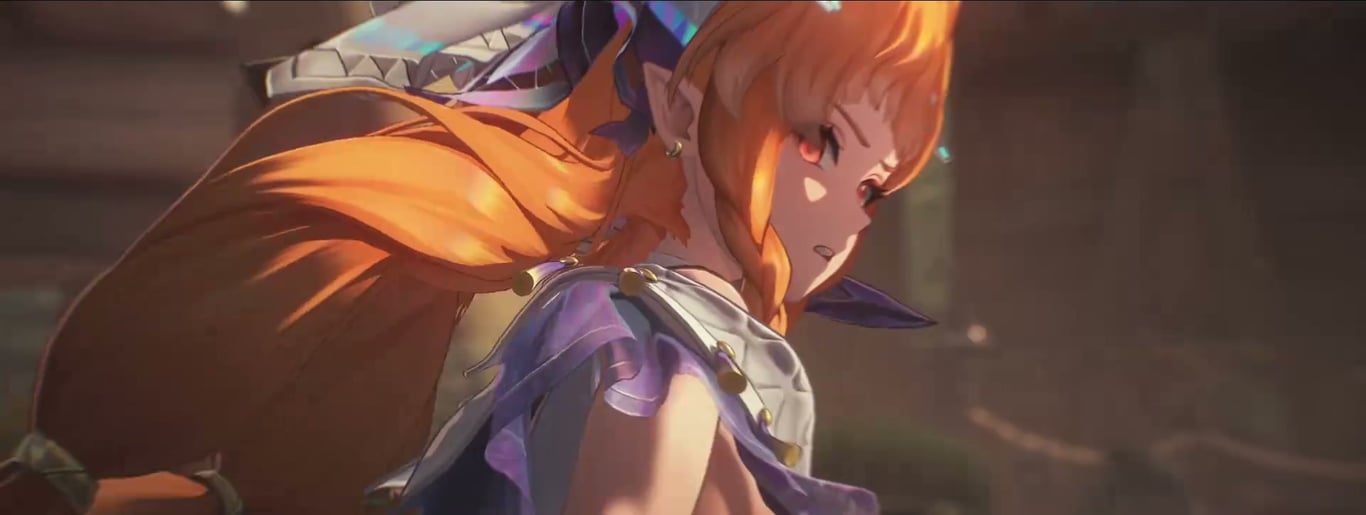
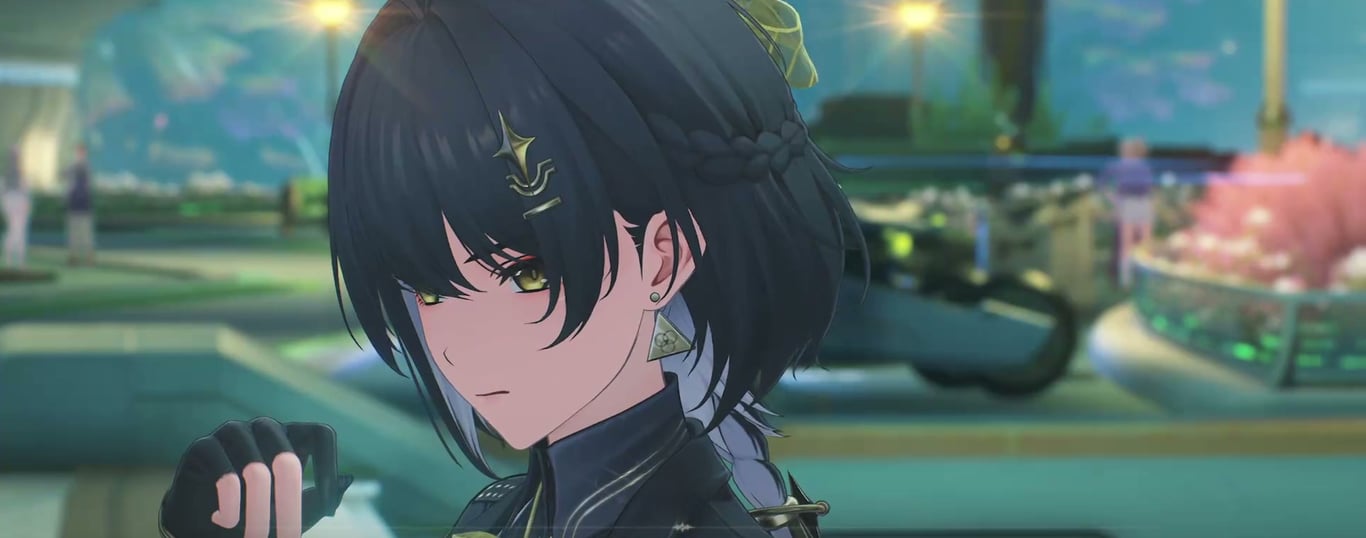
In this pipeline, scene rendering, model calling, and animation transitions can indeed cause loading issues. However, when a dialogue interruption results in a camera freeze lasting several seconds, it clearly exceeds the scope of a standard technical delay—in performance optimization standards, true resource-loading stutters are usually strictly kept under 1 second. These multi-second pauses are, in essence, "structural reservations" within the animation schedule.
The Challenge of Parallel Development: The Zero-to-One Foundation of the Chinese Dub
The development of Wuthering Waves adopts a multi-department coordinated, parallel-module workflow. While this model boosts overall efficiency, it easily creates friction in transitions between stages, with the synchronization of dubbing and animation being a major pain point.
As the game's original audio foundation, the Chinese dub (CN dub) takes on the task of building from zero to one. Early in the tight parallel development schedule, voice actors often lack complete storyboards, relying solely on character design sheets and scripts to perform "blind dubbing". This not only requires the actors to infer the character's psychological state and the scene's tone on their own, but it also means the final audio track length is full of unknowns early on.
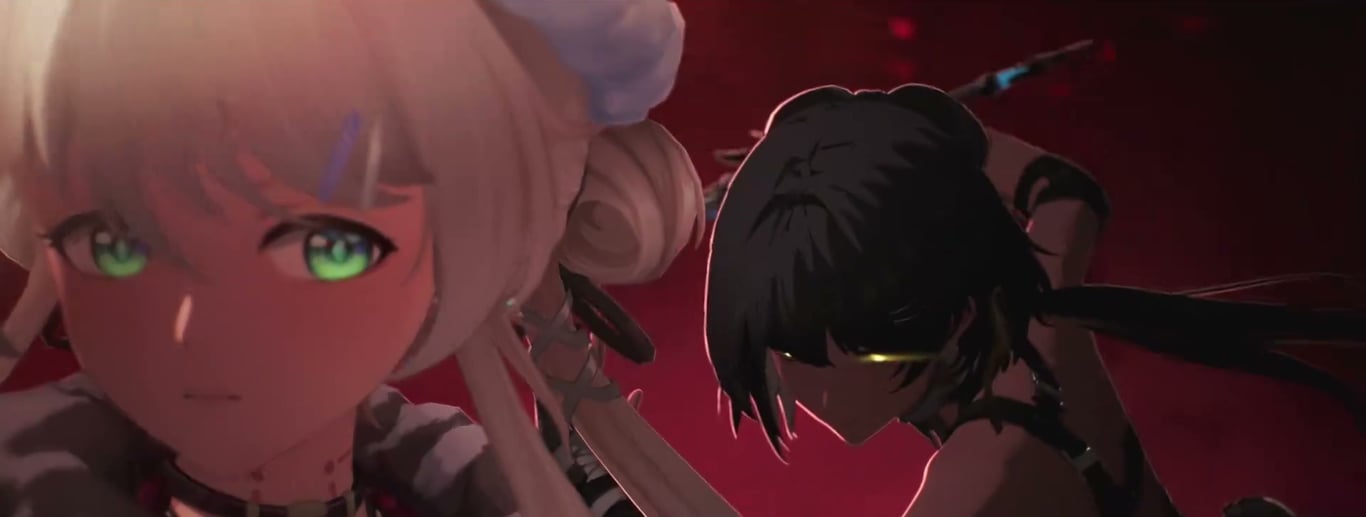
To ensure all departments can progress simultaneously, animators—without final audio files—have to reserve ample time for the shots. This is both to accommodate potential audio tracks from various languages and to leave room for post-production adjustments. The sometimes slower speaking rate of the CN dub is also closely tied to this development environment, which requires setting the tone and estimating durations early on.
Variables in Foreign Dubbing: Duration Differences and Adaptive Adjustments
Compared to the trailblazing CN dub, the Japanese dub (JP dub) and English dub (EN dub) come later in the pipeline and have the CN audio waveforms as a reference point for entry and performance duration. However, structural differences in languages introduce new variables to animation matching.
Overtime Caused by Japanese Grammar: Due to the abundance of modal particles and auxiliary structures in Japanese, the overall audio length of the JP dub is, in most cases, significantly longer than the CN dub. The faster the speaking rate and the longer the sentence, the harder it is to precisely control this duration overflow.
The Efficiency of English Grammar: Contrary to Japanese, the duration of the EN dub usually does not exceed the CN baseline in most situations.
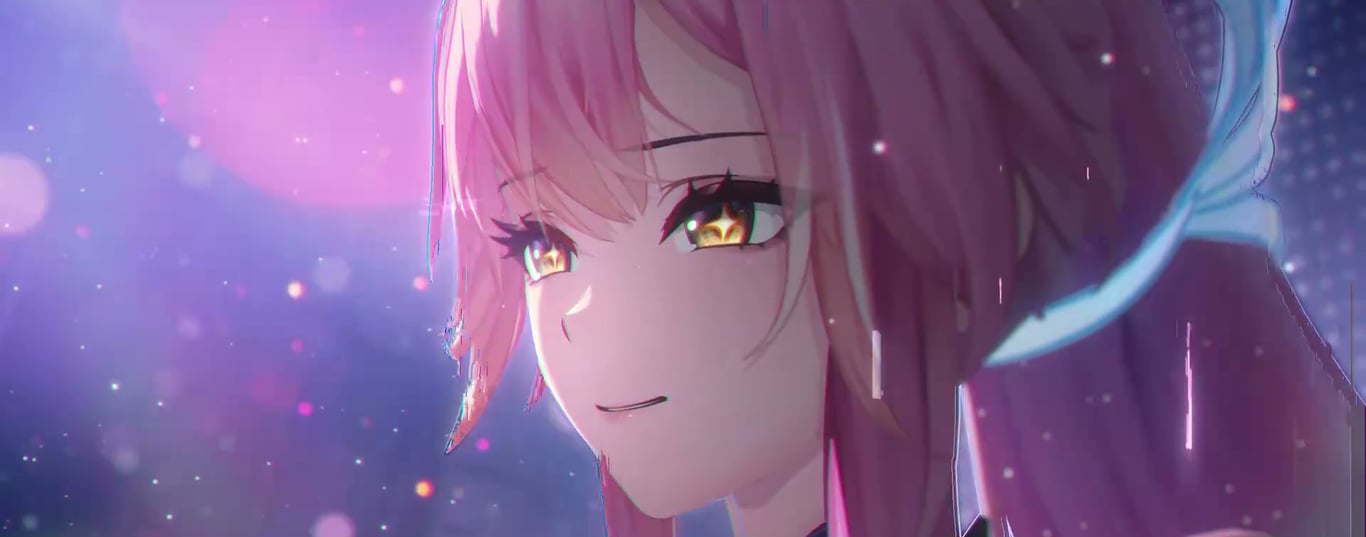
Exceptions in Adaptation: Of course, foreign dubs do not rigidly align. For instance, with "
Aemeath", introduced in Version 3.1, her Japanese dub did not strictly follow the CN timeline in certain scenarios, instead opting for a performance length that better suited the Japanese linguistic context and dramatic tension.
A Counterintuitive Phenomenon: Why Do Foreign Dubs Sometimes Have No Delays?
In actual testing, we often notice a counterintuitive phenomenon: in certain scenes where the CN dub has obvious camera delays, the JP dub transitions perfectly smoothly. This doesn't mean the developers neglect the CN dub; rather, it is an inevitable result of late-stage schedule optimization.
As mentioned earlier, the CN dub, serving as the early baseline for parallel development, undergoes extensive narrative trial and error, leading animators to leave longer blank shots. However, under extremely tight deadlines, there is often no time in the later stages to go back and trim these minor blank-audio animations one by one.
But because the JP dub frequently exceeds the CN "baseline", animators are forced to perform structural fine-tuning on these overtime segments during post-production. During this mandatory trimming and alignment process, the originally reserved blank pauses are conveniently cleaned up. As for the EN dub, because its duration is shorter, it usually only requires simple alignment, rarely triggering such deep structural revisions.
Conclusion
Under Kuro Games' tight overall development schedule, much of the timeline redundancy in camera shots cannot be fully cleaned up before version updates. This directly leads to the three delay phenomena we currently observe in the game:
Structural Redundancy: Delays occur across all language versions at the same dialogue point.
Local Fine-Tuning Differences: Some language versions have delays, while others do not.
The Dividend of Forced Optimization: Foreign dubs (especially the easily-overtime JP dub) actually experience fewer delays than the original Chinese baseline.