

Wuthering Waves Difficulty Inflation: A Deviation in Design?

Recently, discussions surrounding "stat and difficulty inflation" within the Wuthering Waves community have sparked widespread attention. Players who believe the difficulty is inflating point out that enemy HP and mechanics are becoming increasingly overwhelming, putting immense pressure on older characters when facing the Tower of Adversity, Whimpering Wastes, and the Endstate Matrix. Conversely, players who feel the difficulty is appropriate argue that Wuthering Waves has an extremely high operational ceiling, and failing to clear content is often due to unrefined mechanical skills or insufficient team investments.
However, viewing this objectively, the high-difficulty environment control post-Version 3.0 does indeed present pain points worth exploring. This article will deeply break down the core reasons behind this controversy: Has the development team deviated in their choice of reference samples for difficulty design?

- Purchase Limit 0/1
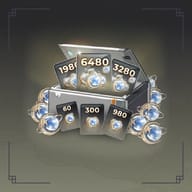
6480 + 1600 Lunites Limited Offer
$70.99
$99.99-$29 Lunitas All-In-One Bundle
$164.82
$200.94-$36.12Insider Channel
$7.39
$9.99-$2.6Connoisseur Channel
$14.78
$19.99-$5.21



The Core of the Difficulty Inflation Public Opinion: Three Major Pressured Groups
The public opinion regarding a game's intensity is usually dictated by the general player base, as top-tier players or meta-focused players with strict pulling plans rarely feel the pressure of shifting environments. Currently, players frustrated by the escalating difficulty can mainly be divided into three categories:
Newcomers (Playing for Less Than 6 Months): Fully clearing the Tower of Adversity and Endstate Matrix in the current version demands a relatively wide character roster. Furthermore, the action combat threshold of Wuthering Waves is inherently high, leading newer players to easily experience negative feedback after two or three months of setbacks.
Preference-Driven Players: These players pull characters purely based on personal preference, sometimes even converting all their
Afterglow Corals into
convenes. Their rosters mostly consist of "0+0" or "0+1" setups (zero Resonance Chains with their signature weapon), and they often struggle to form complete combat systems. Examples include pulling
Phrolova but lacking
Cantarella, pulling
Phoebe but lacking
Zani, or owning
Cartethyia but missing
Ciaccona. Due to fragmented team comps and varying skill levels, these players struggle significantly in high-difficulty environments.
Veterans Sticking to Older Systems: This includes players who insist on using earlier characters like
Changli or
Jiyan. Even if they have a certain level of investment, their overall combat experience easily stalemates when operational techniques are limited or the environmental buffs are unfavorable.
Core Point of Contention: The Gap Between Reference Samples and the "Combat Conversion Rate"
The merit of intensity design lies in its ability to accommodate a broader player demographic. Top-tier players do not actually need the Tower of Adversity or Whimpering Wastes to prove themselves; their sights are often set on the high-score leaderboards of the Endstate Matrix. Therefore, applying excessive pressure in game modes tied to 
Compared to other games in the same genre, many titles typically use low-investment or casual players as the baseline for clearing modes tied to gacha resources, reserving higher-difficulty challenges for top-tier players to gain additional emotional value.
However, the situation in Wuthering Waves is far more complex. As a hardcore action game, both its enemy mechanics and player operational ceilings are exceptionally high. Yet, the current difficulty design seems to use the "overall player average" or simple "theoretical DPS (Damage Per Second)" as a baseline, ignoring the massive gap in actual player execution.
This brings us to the concept of the "Combat Conversion Rate". For instance, a full "0+1" team consisting of 
The Inherent Conflict Between Enemy Mechanics and Time-Limited Challenges
Beyond the disparity in operational skills, another major reason for the disconnect between theoretical DPS and actual combat DPS is the increasing complexity of enemy action modules after Version 3.0.
Take the boss "
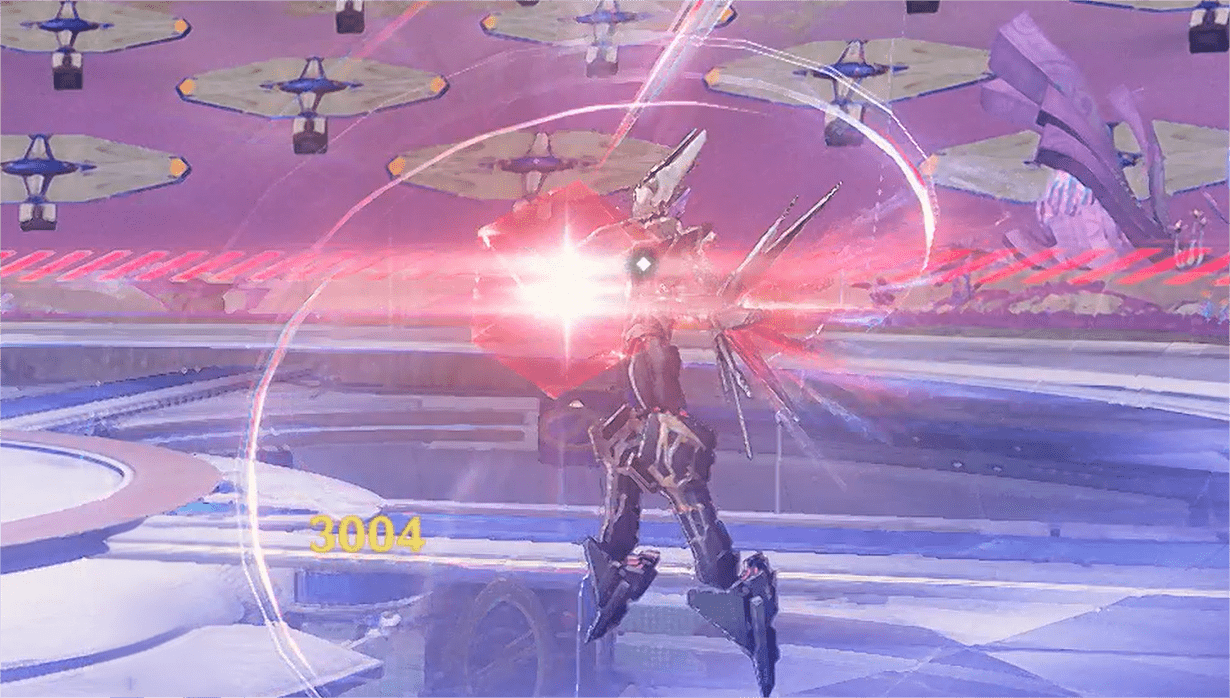
If a player activates their Resonance Liberation only for the boss to fly up and break lock-on, the entire rotation immediately collapses. In reality, players who can proficiently master and refine coordinated attacks and advanced swapping techniques make up a tiny fraction of the total player base; most players struggle to perfectly execute even the most basic, simplified rotations. Therefore, in time-limited challenges tied to Astrite rewards, a reasonable compromise must be made between enemy mechanical interactivity and the player's DPS environment.
Conclusion and Regrets Regarding the Version 3.3 Anniversary Update
The reason this controversy has erupted so intensely recently is that Wuthering Waves accumulated a massive influx of players between Versions 2.2 and 2.7, reaching a peak player base volume during Versions 3.0 and 3.1. Many new players drawn in by the storyline found it difficult to build complete combat systems in a short time, subsequently facing the predicament of being unable to full-star the Tower of Adversity.
Regrettably, in the upcoming Version 3.3 Second Anniversary update arriving on April 30th, the official team does not seem to have made any substantial improvements regarding the aforementioned high-difficulty environments and skewed reference samples. For launch veterans or monthly pass players with stable resource planning, the Astrite rewards from the Tower and Whimpering Wastes might just be a daily "standard clear". However, excessively raising the threshold for obtaining basic Astrite rewards fails to appease hardcore players seeking the limits of the Endstate Matrix, and instead severely damages the enthusiasm of newcomers and preference-driven players during an anniversary milestone meant for universal celebration.
We sincerely recommend that the development team abandon using the theoretical server-wide average as the design baseline for future difficulty control. Instead, pivot to using the "6-month player full-star rate" or the "Matrix basic reward completion rate" as core metrics. Moderately relaxing the threshold for basic rewards is the wisest move to maintain the game's long-term reputation and player retention.
Resource Planning Matters More in a Harder Environment
As endgame difficulty rises, resource planning becomes more important for every type of player. Missing Astrite from Tower of Adversity or Whimpering Wastes can slow down future banner preparation, especially for newcomers who still need to build complete teams. For players who want to prepare more Lunites for upcoming characters or weapons, a safe Wuthering Waves top up option can help reduce resource pressure without changing the core need to improve team building and combat execution.