The Mid-2026 Free Fire Meta Shift: Hidden Patch Notes & Grandmaster Blueprints
 Avery Wilson


Garena's mid-2026 server-side overhaul quietly modified entity validation, tightened mid-range aim assist hitboxes, and reworked throwing physics. If your solo queue win streaks have stalled out, this technical teardown delivers the precise mechanical calibration matrix, sensitivity adjustments, and account optimization strategies you need to bypass matchmaking friction and lock down Grandmaster before the competitive window closes.
- The Gloo Wall Buffer Delay: Breaking Down Server Entity Validation
- Aim Assist Algorithm Tightening: Overcoming the Mid-Range Tracking Deficit
- Re-calculating the Throwing Trajectory Arc
- The SBMM Trap: Navigating Solo Queue MMR Imbalances
- Surviving Multi-Tiered Late-Game Zones
- High-Tier Infrastructure and Team Assets Selection
- FAQ
The mid-2026 major patch for Garena Free Fire has officially hit live servers, completely turning the competitive ranked meta upside down. While the public patch notes highlighted flashy new cosmetics and minor map adjustments, the developer team quietly deployed a series of substantial, unannounced server-side modifications. These under-the-hood mechanical tweaks have significantly elevated the skill floor required for the seasonal Grandmaster push, leaving many solo players struggling to secure their usual win streaks.
To maintain your competitive edge in this punishing environment, adapting to these hidden combat variables is no longer optional. This technical breakdown delivers a data-driven teardown of the secret adjustments, providing concrete first-person tactical blueprints and loadout optimizations you need to out-macro the system and secure your rank before the competitive window closes.

The Gloo Wall Buffer Delay: Breaking Down Server Entity Validation
1. Underlying Host Telemetry Changes
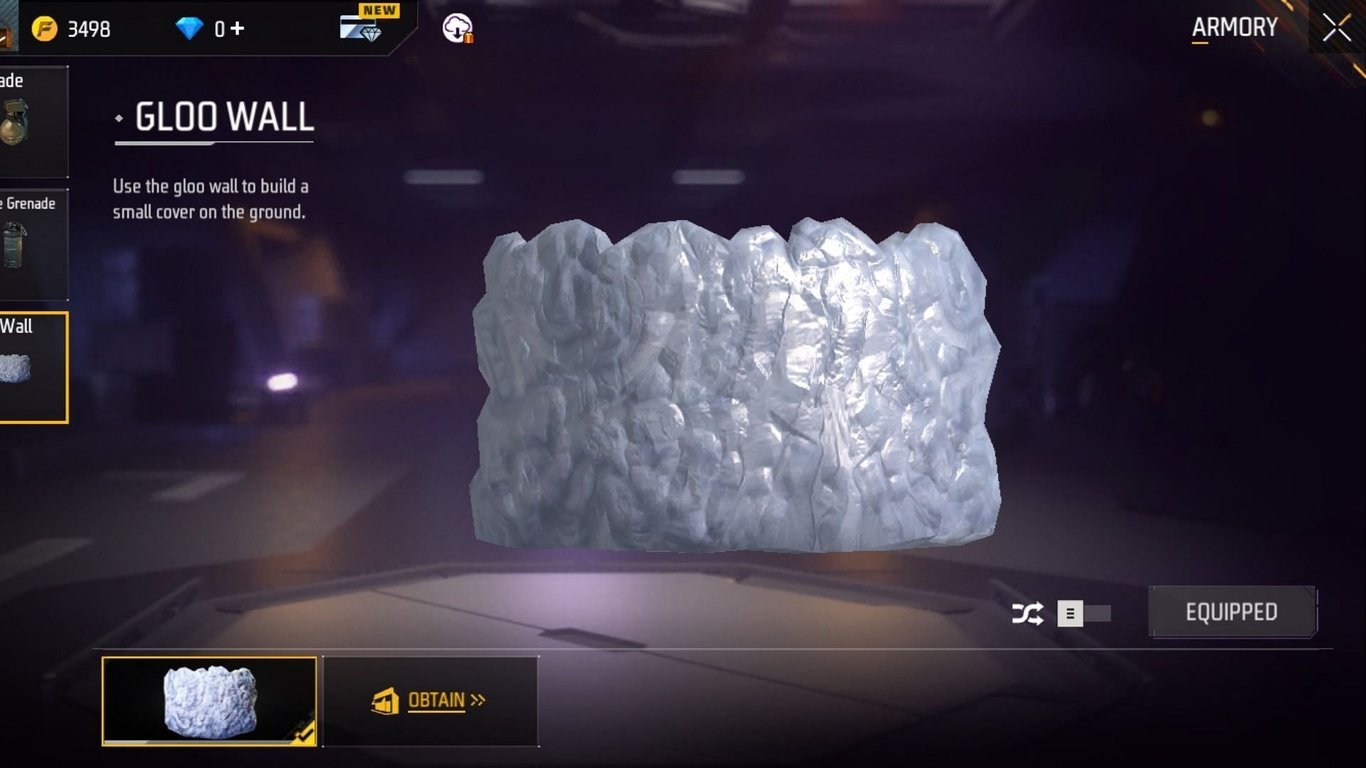
For multiple seasons, aggressive rushers and close-quarters duelists heavily relied on instant reflex Gloo Wall placements to completely nullify incoming sniper fire and shotgun blasts. However, analyzing active server-side synchronization reveals a major alteration in how input registration is validated by the host. Garena has subtley shifted the priority of entity validation, introducing a stricter server-side confirmation requirement before a deployed asset is recognized globally.
The practical consequences of this netcode adjustment are brutal. If your operational ping fluctuates even slightly, enemy high-velocity projectiles can now bypass your shield's local visual asset. The host server registers the fatal damage hitboxes on your character model split-seconds before it acknowledges the wall's physical presence in the lobby. For official technical documentation regarding netcode synchronization and asset pooling, you can track developer insights through the official Garena Free Fire Portal.
2. First-Person Combat Analysis: The Pitfalls of Panic Deployment
"I'm rotating past the bottom of Clock Tower, transitioning toward the open brick wall. Suddenly, an enemy jumps out with an M1887 shotgun. My crosshair immediately snaps down to my feet while my left thumb smashes the Gloo Wall bind. On my local screen, the ice wall starts its deployment animation. But due to the server-side validation delay, the enemy's second scatter-shot passes cleanly through the semi-transparent asset. I drop instantly. My death recap shows my wall built after my character model was cleared. In the current landscape, relying on reflex casting to save you from a close-range ambush is an invitation to the lobby."
3. Pro-Level Crosshair Re-calibration Matrix
To combat the added desync window, players must stop trusting reactive walls and instead focus on proactive placement parameters based on active combat ranges:
| Engagement Distance | Crosshair Default Placement | Pre-Deployment Action |
|---|---|---|
| Close Range (<15m) | Chest Level (Slightly Downward Angle) | Jump-cast to force immediate downward entity snapping |
| Mid Range (15m-40m) | Head Level (Parallel to Horizon) | Slide directly behind natural hard cover before building |
Aim Assist Algorithm Tightening: Overcoming the Mid-Range Tracking Deficit
1. Shrunk Auto-Lock Hitboxes for SMGs and Assault Rifles
If your standard vertical drag-shots are suddenly whiffling into empty air or sticking awkwardly to enemy shoulders, your muscle memory isn't entirely to blame. The core engine overhaul has completely reconstructed the Dynamic Hit Correction (Aim Assist) system for mid-range weapon classes. According to foundational weapon tracking parameters documented by the competitive community on the Free Fire Wiki, the magnetic auto-lock hitbox zone has been noticeably tightened across all SMGs and traditional Assault Rifles, most notably impacting meta choices like the MP40, Thompson, and SCAR.
The reduced lock-on envelope means the game's internal tracking friction no longer glues your reticle to the target's upper torso automatically. For high-tier players, this modification demands far more manual tracking precision, as the traditional 「swipe-and-stick」 method now frequently results in your crosshair overshooting the target completely.
2. First-Person Combat Analysis: Mid-Range Tracking Failures
"I'm holding the second-floor window angle inside Central on Purgatory, scoping down with a base, un-skinned MP40 at an enemy sprinting across the open courtyard. I track his path and initiate my standard upward thumb-drag to trigger a clean headshot sequence.
In past patches, the aim assist would immediately catch onto the neck area and lock onto the helmet. This time, because the lock-on threshold is narrower, my crosshair passes straight over his shoulder and floats completely over his head into empty space. The natural drag velocity completely overshoots the target due to the reduced tracking friction."
3. Overriding the Mechanical Deficit: Weapon Attribute Optimization
Relying on the base, un-skinned weapon armory is no longer viable in high-tier Master or Grandmaster lobbies. To successfully bypass this artificial mechanical handicap, competitive players are optimizing their underlying weapon attributes.
Budgeting a precise Free Fire diamond top up allows you to upgrade critical Evo Skins, such as the Predatory Cobra MP40 or Blue Flame Draco AK47. The unlocked double rate-of-fire and accuracy multipliers effectively widen your tracking margins, letting you override the aim-assist deficit through superior stat scaling.
4. Recommended Control & Sensitivity Blueprints
To stabilize your horizontal drift and recapture consistent red numbers under the revised tracking parameters, update your control settings to these exact calibrations:
- General: 96 - 100 (Crucial for executing rapid turn-rates under desync conditions)
- Red Dot: 88 - 92 (Directly compensates for the friction loss)
- 2x Scope: 84 - 87 (Stabilizes vertical sway during mid-range spray transitions)
- 4x Scope: 79 - 83 (Prevents over-scoping past cross-running vehicle hitboxes)
Re-calculating the Throwing Trajectory Arc
Tactical utility has received an unannounced physics adjustment that completely disrupts established map-clear setups. Internal testing server logs show a significant change to the global gravity multipliers assigned to hand grenades, flashbangs, and smoke canisters. Garena has quietly increased the downward gravitational acceleration of active throwables, accelerating their descent velocity and making the long, floaty 「High-Toss Glide」 a relic of past seasons.
Because items drop significantly quicker, your old reference lineups for tossing utility over walls or into distant multi-story complexes will fall short, detonating prematurely at the base of buildings or bouncing back into your own squad's rotation lane.
The SBMM Trap: Navigating Solo Queue MMR Imbalances
The current state of solo queue matchmaking in high-tier ranked structures is designed to manage individual performance outliers to balance overall lobby averages. In a bid to maintain reasonable matchmaking queue times for top-tier competitive ranks, the matchmaking system utilizes a dynamic compensation algorithm. Rather than waiting indefinitely to find an entire lobby of identical individual skill levels, the host server balances cumulative team matchmaking ratings (MMR).
The practical result of this algorithm creates a heavily asymmetric experience for highly skilled solo players. When your individual combat performance consistently marks you as a top-performing player in the active matchmaking pool, the system balances your team's total MMR by partnering you with uncoordinated, lower-performing random teammates. Concurrently, to fill the higher brackets of the lobby before queue timers expire, the system frequently pits your mixed team against fully synchronized, pre-made four-man squads utilizing active voice communication, leading to highly volatile win-rate swings in solo queue.
Surviving Multi-Tiered Late-Game Zones
Navigating late-game circles on multi-tiered terrain—such as Nexterra's Intellect Center or multi-level lab complexes—remains one of the most mechanically frustrating challenges in ranked play. It is critical to understand that Free Fire’s dynamic circle algorithm generates safe zones based purely on two-dimensional (X and Y axis) map coordinates. The system does not calculate player distribution along the Z-axis (vertical height), meaning the final zone column vertically pierces through every single layer simultaneously, from the deep underground tunnels to the highest rooftops.
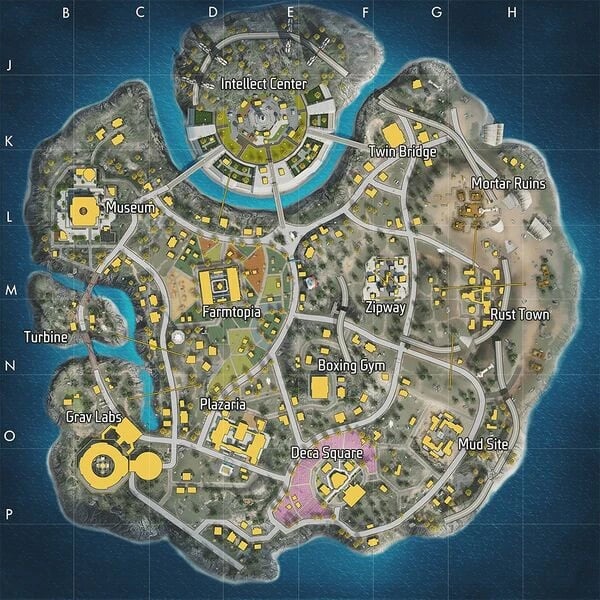
The practical hazard of this mechanic is the structural stalemate it creates. When a final circle centers on a multi-tiered structure, squads on the surface and squads inside subterranean maintenance pipelines are technically both "in the safe zone." Because the system does not favor one layer over the other, players are frequently caught off guard not by an algorithmic shift, but by a forced heal-off or a vertical ambush when the final zone closes to an absolute point.
High-Tier Infrastructure and Team Assets Selection
According to competitive tracking analytics, squads operating with coordinated character skill combinations paired with max-tier weapon attributes maintain a significantly higher win rate over raw mechanical solo-queue players within high-tier brackets. Optimizing your overall profile loadout is no longer an optional luxury—it's a strict requirement for survival.
For dedicated rank pushers who refuse to let unbalanced matchmaking parameters derail their seasonal progression goals, bypassing the solo-queue blind box is your most logical step forward. Relying on trusted, secure networks for your Free Fire top up provides an excellent logistical foundation. By securing premium weapon evo-crates, unlocking elite character links, and fully optimizing your tactical account infrastructure, you can lock down your high-tier rank adjustments cleanly and hit Grandmaster before the meta shifts again.
FAQ
QHow does the server-side validation delay affect Gloo Wall deployment after the mid-2026 update?
The update structuralized a stricter host-side confirmation process for global entity registration. This means reactive, last-second placements during close-quarters combat are no longer reliable. If you experience even minor latency spikes, enemy projectiles can bypass your local visual shield hitboxes before the host server registers the asset globally, making 「proactive cover tracking」 the new standard for high-tier survival.
QWhy are my mid-range drag-shots missing after the Free Fire aim assist adjustments?
Garena has noticeably tightened the dynamic auto-lock hitbox envelope for mid-range weapon classes like SMGs and Assault Rifles (including the MP40 and SCAR). Because the magnetic tracking friction has been reduced, your crosshair will no longer automatically glue to the target's upper torso during a standard vertical thumb-drag. To override this mechanical deficit, high-tier players are relying on a premium Free Fire top up to secure advanced weapon evo-crates and max-out weapon accuracy attributes.
QHow does the high-tier SBMM algorithm balance teams for top-performing solo players?
To minimize high-tier queue timers, the matchmaking system utilizes a dynamic compensation algorithm that balances cumulative team Matchmaking Ratings (MMR) rather than matching identical individual skill levels. If you are a top-performing solo queue player with high competitive tracking analytics, the system will frequently pair you with uncoordinated teammates to offset the lobby average, often pitting your mixed squad against fully synchronized, pre-made four-man teams.


- 100+10 Diamonds$0.82-$0.15$0.97
- 310+31 Diamonds$2.46-$0.43$2.9
- 520+52 Diamonds$4.11-$0.73$4.84
- 1060+106 Diamonds$7.81-$1.38$9.19
- 2180+218 Diamonds$15.56-$2.75$18.31
- 5600+560 Diamonds$39.09-$6.9$45.99
- Weekly Membership$1.79-$0.32$2.11
- Monthly Membership$8.61-$1.52$10.13
- Booyah Pass card$3.18-$0.56$3.74
- Weekly Lite$0.42-$0.07$0.5
- Jovial Symphony King Bundle$4.56-$0.8$5.36
- Queen Joyful Melody Bundle$4.56-$0.8$5.36