Home
Home BlogWhy Your First Week Feels Unnaturally Easy: The Truth Behind New Player Kill Streaks
Why Your First Week Feels Unnaturally Easy: The Truth Behind New Player Kill Streaks
 Quinn Thompson


If you’ve ever started a new competitive mobile game and thought, “Wait… am I actually good at this?” — you’re definitely not alone.
For many players, the first few days feel almost unreal. Enemies miss shots they shouldn’t. Fights tilt in your favor. Kill counts climb faster than expected. Wins stack up. Confidence spikes hard.
And then, almost overnight, it stops.
Your aim hasn’t changed. Your decisions still feel reasonable. But suddenly, every fight is harder. Every mistake gets punished. Every match feels heavier.
This isn’t bad luck.
And it’s not coincidence.
There’s a reason the first week feels so smooth — and it has very little to do with your actual skill.

You Aren’t Playing the Same Game Yet
The biggest mistake new players make is assuming that week one represents the “real” game.
It doesn’t.
Most modern competitive games quietly segment their player base. New accounts are funneled into protected environments where opponents are a mix of brand-new players, AI-controlled enemies, or low-impact hybrids designed to behave just human enough.
These matches aren’t meant to be competitive.
They’re meant to feel good.
Enemies hesitate. Positioning is sloppy. Reaction times are slow. Aggression comes at the wrong moments. The goal isn’t to challenge you — it’s to keep you comfortable long enough to stay.
This environment gives new players space to learn basic mechanics without getting instantly crushed. But it also creates a dangerous illusion: early success starts to feel like proof of talent, when in reality, the difficulty curve simply hasn’t been turned on yet.
Early Kill Flow Is Carefully Engineered
That “smooth” kill experience isn’t accidental. It’s designed.
Early-game systems often lean subtly in your favor. Damage feels more consistent. Engagements resolve faster. Mistakes like poor positioning or late rotations don’t get punished as harshly.
The result is a clean feedback loop:
You get kills → you feel capable → you play more → you stay longer.
From a design perspective, this is textbook retention psychology. The game wants emotional buy-in before it demands real execution.
That’s why your first week feels fast, fluid, and rewarding — even if your fundamentals are still shaky and untested.

Progression Masks the Difficulty Spike
Another reason early kills feel effortless is progression masking.
In the opening week, most opponents are under-equipped, under-optimized, and inexperienced. Your improvement curve looks steep because the baseline is low. As systems unlock, matchmaking quietly expands, and suddenly you’re facing players with refined loadouts, practiced movement, and real situational awareness.
The shift doesn’t happen all at once — which makes it worse.
Many players internalize this moment as failure:
“I was doing great… what happened?”
What happened is simple: you finally entered the real competitive ecosystem.
This is also when players start thinking differently about efficiency, resources, and optimization — which is why discussions around smarter upgrades or even a Free Fire top up begin to feel relevant, as pure playtime stops being enough to keep up.

The Real Skill Test Starts After the Illusion Ends
The first week isn’t a skill check.
It’s an engagement filter.
The real game starts the moment the training wheels come off.
At that point, kills aren’t handed to you by lenient matchmaking or forgiving combat math. They’re earned through positioning, timing, map awareness, and calm decision-making under pressure.
Players who recognize this transition adapt.
Players who don’t often quit, convinced the game “suddenly became unfair.”
The irony is that those early easy kills were never a reward for being good. They were an invitation to learn.
Once you understand that, frustration gives way to clarity — and improvement becomes intentional, not emotional.
 2.9K
2.9K 5.0
5.0 100+10 Diamonds$0.82-$0.15$0.97
 310+31 Diamonds$2.46-$0.43$2.9
 520+52 Diamonds$4.11-$0.73$4.84
 1060+106 Diamonds$7.81-$1.38$9.19
 2180+218 Diamonds$15.56-$2.75$18.31
 5600+560 Diamonds$39.09-$6.9$45.99
 Weekly Membership$1.64-$0.29$1.93
 Monthly Membership$8.24-$1.45$9.69
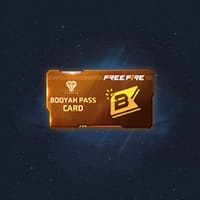 Booyah Pass card$6.92-$1.22$8.14
 Weekly Lite$0.41-$0.07$0.48
 Jovial Symphony King Bundle$4.11-$0.73$4.84
 Queen Joyful Melody Bundle$4.11-$0.73$4.84
 2.9K5.0